
The Ultimate Insider Guide to Vintage Omega Watches - Models, History and What to Look For
There are watch brands, and then there is Omega. Few names in the history of horology carry quite the same weight - the same combination of genuine technical achievement, extraordinary design heritage, and sheer breadth of remarkable timepieces produced across more than a century of watchmaking. Collectors the world over chase vintage Omega watches with a passion that never seems to diminish, and for very good reason.
But the world of vintage Omega can feel overwhelming when you first step into it. The range of models is vast, the decades of production long, and the variations between references numerous enough to fill several books. This guide is designed to cut through that complexity - to give you a genuinely useful, honest overview of the vintage Omega landscape with a focus on the dress watches that represent, in many collectors' eyes, the very finest work the brand has ever done.
Whether you are buying your first vintage Omega or adding to an existing collection, this is the guide we wish someone had handed us at the beginning.
A Brief History of Omega - How It All Began
The Omega story begins in 1848, when a young watchmaker named Louis Brandt set up a small workshop in La Chaux-de-Fonds, Switzerland, assembling pocket watches from parts sourced from local suppliers. After Brandt's death, his two sons transformed the business into a vertically integrated manufacturer - one of the first in Switzerland - and in 1894 introduced a new movement of such precision and quality that they named the entire company after it. That movement was called the Omega, and the name stuck.
The choice of name was not accidental. Omega - the last letter of the Greek alphabet - was intended to signal that this movement represented the final word in watchmaking achievement. It was a bold claim, but the watches that followed over the next century and more did a great deal to justify it.
Through the early twentieth century, Omega built a reputation for precision timekeeping that earned them contracts as the official timekeeper of the Olympic Games - a relationship that began in 1932 and continues to this day. Their movements were adopted by military forces, railway companies, and scientific institutions around the world as the standard against which accuracy was measured.
By the post-war period, Omega had established itself as one of the two or three most prestigious watch brands in the world - and the dress watches they produced through the 1950s and 1960s are the centrepiece of their legacy for many collectors.
Why Vintage Omega Dress Watches Are So Special

Before diving into the specific models, it is worth stepping back and asking what it is about vintage Omega dress watches in particular that makes them so enduringly desirable.
The answer lies in a combination of factors that is very hard to find elsewhere at any price point.
The movements are the foundation. The calibres Omega produced through the 1950s and 1960s - both manual-wind and automatic - are among the finest ever made. Beautifully finished, extraordinarily reliable, and built to tolerances that put many contemporary competitors to shame, these movements were engineered to last essentially indefinitely with proper care. Many examples made over sixty years ago are still running perfectly today, which is a testament to the quality of engineering behind them.
The dials are extraordinary. Vintage Omega dress watch dials from the 1950s and early 1960s - the gilt dials, the applied index dials, the delicately printed and perfectly proportioned surfaces from this era - represent dial-making at its absolute finest. The warmth of a properly aged gilt dial, the depth of quality applied indices catching the light, the elegance of the typography - these are details that reward close attention in a way that very few things made today ever do.
And the cases are genuinely beautiful objects. The restraint of a 1950s Omega case - the considered proportions, the delicate lug profiles, the quality of the finishing - reflects a design sensibility that was entirely focused on elegance and longevity rather than trend or fashion.
All of this, and vintage Omega dress watches remain genuinely accessible in a way that comparable pieces from certain other prestigious Swiss brands simply are not. That combination of quality and accessibility is, frankly, remarkable.
Browse our full vintage Omega collection today!
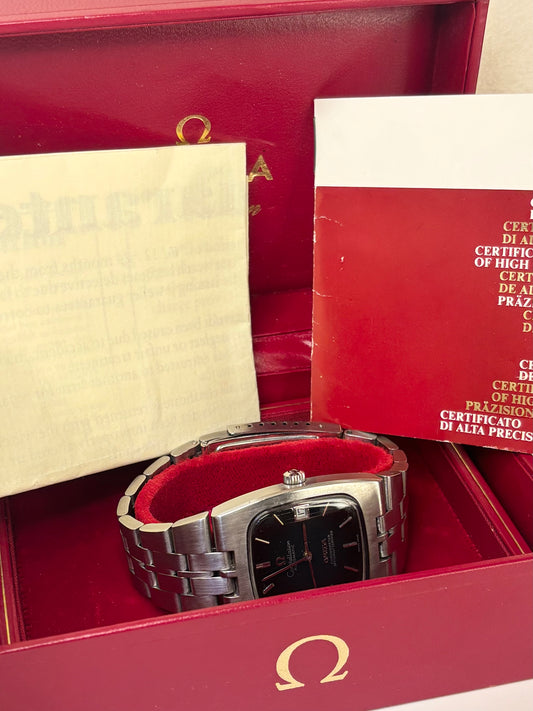
The Omega Constellation - the Jewel in the Crown

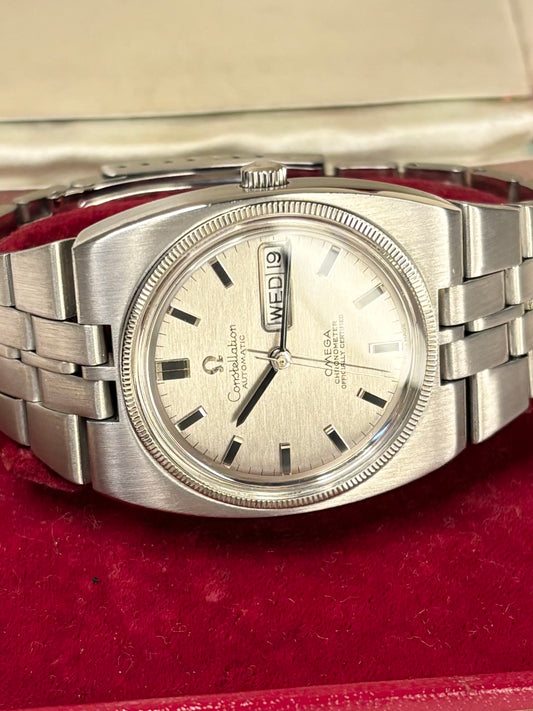
If there is one vintage Omega model that sits at the very top of the dress watch hierarchy for collectors, it is the Constellation - and specifically the early Constellation references produced through the late 1950s and 1960s.
Introduced in 1952, the Constellation was Omega's flagship precision timepiece - a watch designed to showcase the very best movements the company produced, certified to the highest standards of accuracy and housed in cases of exceptional quality. The name referred to the Chronometer certification that every Constellation movement received - a rating awarded only to movements that had been tested and certified by an official Swiss testing bureau to meet the most demanding accuracy standards.
The early Constellation references are characterised by a number of features that make them immediately recognisable and enormously appealing to collectors. The most celebrated of these is the pie-pan dial - a slightly domed, stepped dial profile that creates a beautiful three-dimensional depth, with the outer edge of the dial sitting lower than the centre, like an upturned pie dish. Pie-pan dial Constellations from the late 1950s and early 1960s are among the most sought-after vintage Omega watches in existence, and a well-preserved example with original gilt dial and matching hands is a genuinely breathtaking thing. For a full breakdown of the incredible Pie-Pan Constellations, check out our full discussion elsewhere on our blog!
The cases of these early Constellations are equally distinguished. Many feature what is known as the observatory caseback - a solid caseback engraved with the image of the Geneva Observatory, a reference to the precision certification the movement inside had received. These casebacks were not designed to be opened during normal wear, which has helped protect the movements inside from dust and moisture over the decades.
Through the mid-1960s, the Constellation evolved - the pie-pan dial gradually gave way to flatter, more modern dial designs, and the cases took on the slightly bolder proportions of the decade. The C-case Constellation of the later 1960s, with its distinctive integrated stepped case and fluted caseback, is another widely loved reference with a very dedicated collector following.
By the 1970s, the Constellation had adopted the broad arrow hands and integrated bracelet that are characteristic of the decade's design sensibility - a very different watch from its 1950s ancestor, but one with its own considerable charm and a growing collector following today.
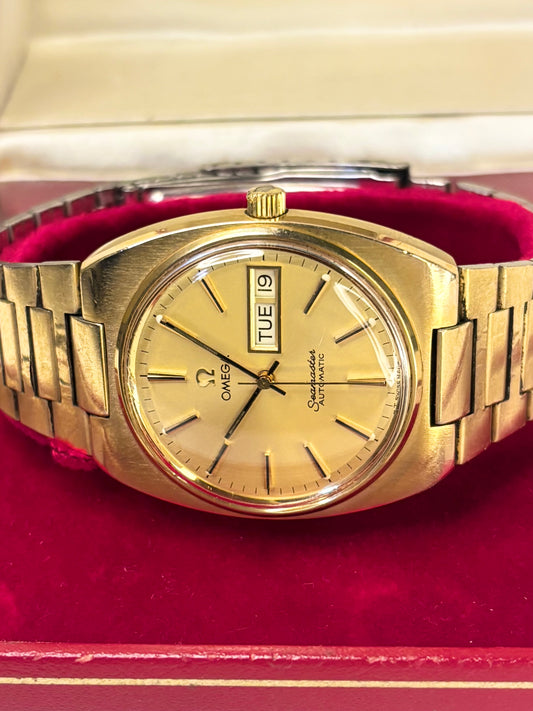
The Omega Seamaster - Beyond the Diver

The Seamaster is today most commonly associated with the professional diving watches that have carried the name since the 1990s, and with its most famous fictional wearer. But the Seamaster family is far older, far broader, and in its vintage dress watch incarnations, far more interesting to collectors than most people realise.
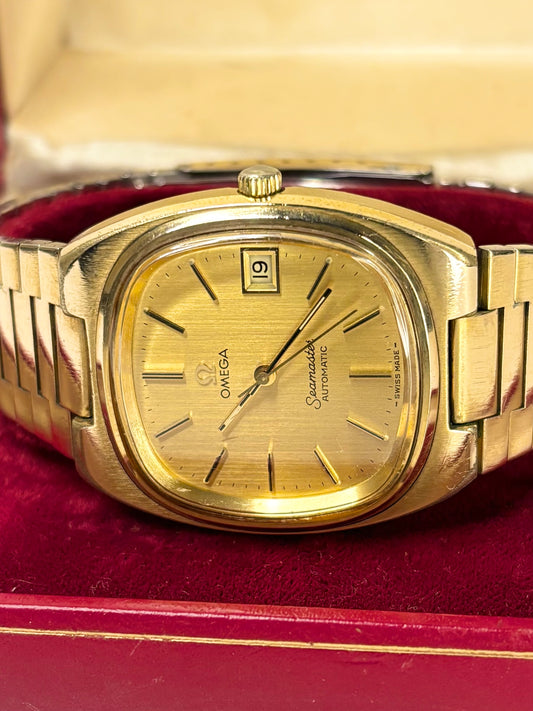
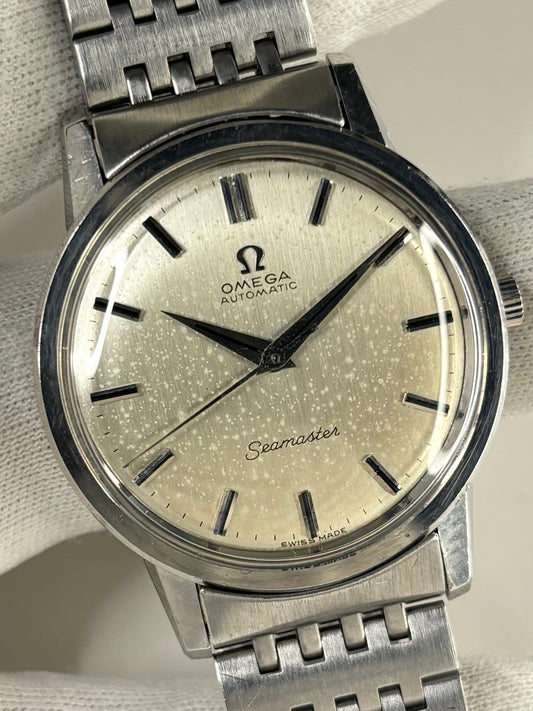
The Seamaster was introduced in 1948 as Omega's first post-war watch, designed to be a robust, reliable, and genuinely wearable everyday timepiece. The early Seamasters are slim, elegant dress watches with a water resistance that was genuinely innovative for the period - the name referred to the improved sealing of the case, which made these watches suitable for everyday wear without the need for the careful handling that many fine watches of the era demanded.
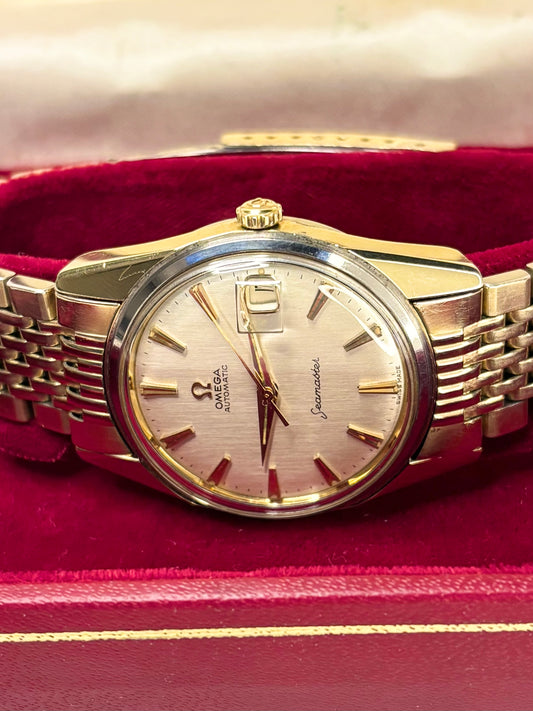
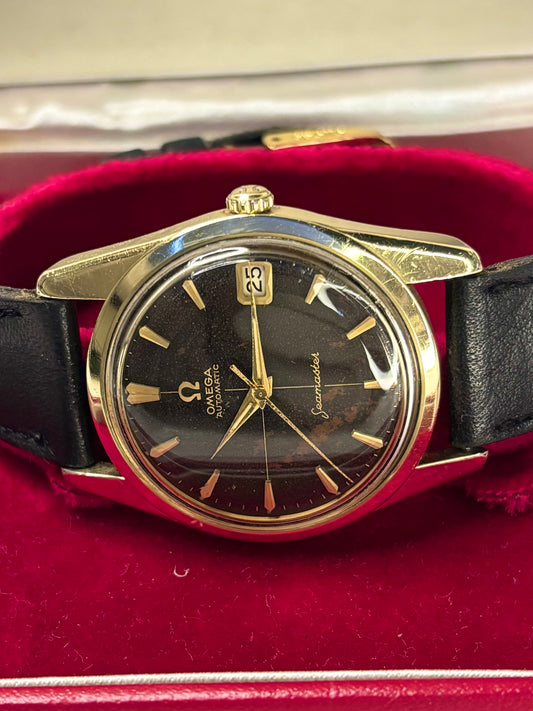
The vintage Omega Seamaster dress watches of the 1950s and early 1960s are particularly beautiful objects. Typically housing manual-wind or bumper automatic calibres, they are slim, refined, and carry the dial quality and finishing standards of the period with real distinction. The combination of the Seamaster name - with its implication of robustness and reliability - and the elegant dress watch proportions of these early references creates a timepiece that is genuinely versatile and genuinely beautiful in equal measure.
A well-preserved vintage Omega Seamaster from the late 1950s, with its original dial intact and the warm patina of sixty-plus years of existence, is one of the very best entry points into vintage Omega collecting - offering exceptional quality, genuine history, and a level of wearability that more precious pieces cannot always match.
The Omega De Ville - Quiet Elegance

The De Ville name was introduced by Omega in 1967, initially as a sub-designation for the dressier pieces within the Seamaster range, before becoming a standalone collection in its own right. The name - French for of the town - signals the intent clearly. These were watches designed for urban, formal, everyday life, as far removed from the world of professional tools and sports timing as a watch could be.
Vintage Omega De Ville watches from the late 1960s and 1970s represent a particular and very appealing kind of elegance. The cases are slim, the dials clean and uncluttered, and the overall impression is one of understated confidence - these are not watches that shout, but watches that reward the attention of anyone who looks closely enough to appreciate them.
The De Ville range of this era also showcases the full range of Omega's dial-making craft. Brushed, grained, and textured dials in warm champagne tones, silver, and occasionally more adventurous colours give individual pieces a character and variety that makes them genuinely enjoyable to collect. Finding a vintage Omega De Ville with an unusual dial treatment in excellent original condition is one of the quiet pleasures of shopping in this part of the market.
Browse our vintage Omega dress watch collection today!
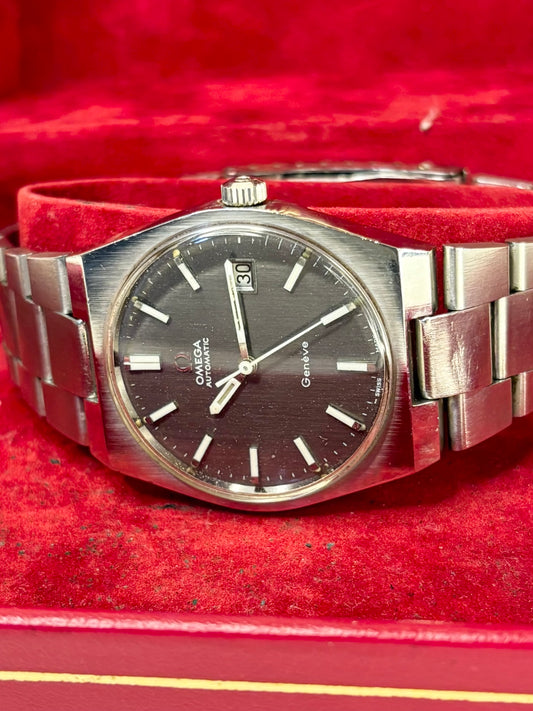
The Omega Genève - the Everyday Classic

The Genève range sits perhaps a little further from the spotlight than the Constellation or the Seamaster, but it is a collection that deserves considerably more attention than it typically receives - particularly from collectors who are looking for exceptional quality and genuine vintage Omega character at a more accessible price point.
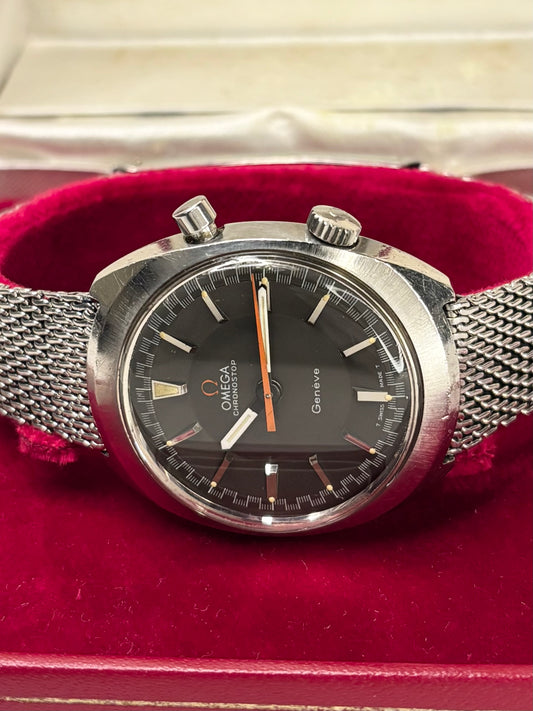
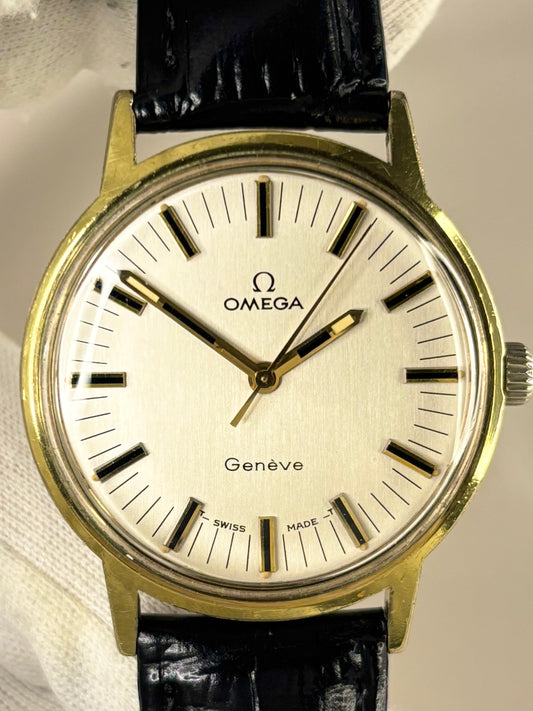
The Genève name was used by Omega through the late 1960s and 1970s across a wide range of dress and everyday watches, typically housing automatic calibres of the same quality found in their more prestigious stablemates. The cases are clean and well-proportioned, the dials beautifully made, and the overall standard of finishing entirely consistent with the broader Omega reputation of the era.
What makes the vintage Omega Genève particularly interesting from a collector's perspective is the sheer variety within the range. Unusual dial colours, interesting case shapes that reflect the design experimentation of the 1970s, and variations in bracelet and strap configurations give individual pieces a real sense of personality. The Genève is, in many ways, the vintage Omega for collectors who look for character over cachet - and that is a very rewarding place to be.
What to Look for When Buying a Vintage Omega Dress Watch

Understanding the models is one thing. Knowing what to look for and how to spot a fake Omega is another - and this is where the difference between a good purchase and a great one is made.
The dial is the single most important thing to assess. As discussed in our guide to spotting a refinished vintage watch dial, an original, unrestored dial is the foundation of a desirable vintage Omega. Look for natural patina consistent with the age of the watch, original applied indices that sit perfectly flush and even, and printing that is sharp, correctly proportioned, and consistent with known references for that model. A dial that looks too fresh, too uniform, or that shows any signs of having been refinished should be approached with caution.
The hands matter enormously too. Original matching hands in good condition, with lume patina that matches the dial, are a strong sign of an untouched watch. Replacement hands - however carefully chosen - always detract from the overall picture.
The case tells its own story. A light, even patina on the case surfaces is entirely natural and desirable. Heavy polishing - which softens the crisp angles and removes the original finishing - is something to avoid. Original brushed surfaces on the flanks of the lugs, combined with polished surfaces on the tops, should still be clearly differentiated on a well-preserved vintage Omega. It's hard to beat a gold-filled vintage Omega watch!
The movement is the final piece of the picture. A vintage Omega calibre that has been properly serviced and is running accurately is a long-term pleasure. One that has not been serviced in many years is not necessarily a problem - but it is something to factor into your thinking. At AR Collectables, every vintage timepiece we sell is tested for timekeeping over a 24-hour period before it is listed, so you can be confident that what you are buying is running as it should.
It can be very difficult to date a vintage Omega watch without industry knowledge. That's why I've put together a discussion breaking down how to date a vintage Omega from its serial number!
The Movements Inside - a Quick Guide
We have written in more detail about the history of both manual-wind and automatic movements elsewhere on this blog, but it is worth briefly summarising what you are likely to find inside a vintage Omega dress watch.
Through the 1950s, many Omega dress watches - particularly the earlier Constellations and Seamasters - housed manual-wind calibres. The calibre 267, 268, 283, and 284 are all widely encountered and well-regarded examples from this period. These slim, beautifully finished movements power some of the most elegant vintage Omega dress watches ever made, and their manual-wind nature allows for case profiles of extraordinary thinness.
Bumper automatic calibres - most notably the calibre 342 and 351 - were widely used through the early-to-mid 1950s, particularly in the Seamaster range. The gentle thud of the bumper rotor is one of the most characteristically charming details of a vintage Omega from this era.
From the late 1950s onwards, full-rotor automatic calibres became increasingly dominant. The calibre 550 series - encompassing the 550, 551, 552, 560, 561, and their variants - represents Omega automatic watchmaking at its absolute finest. Housed in Constellations, Seamasters, and De Villes throughout the 1960s, these movements are reliable, accurate, and beautifully finished. Finding a vintage Omega with a 550-series calibre in good condition is always a very good day.
For a full discussion on vintage Omega mechanisms, check out the rest of our blog!
Why Now is a Brilliant Time to Start Collecting Vintage Omega
The vintage Omega market, like that of the vintage Tissot market, has grown significantly in collector interest over recent years - but it remains, relative to certain other prestigious Swiss brands, genuinely accessible. The quality of what is available at sensible price points is extraordinary, and the depth of the market means there is always something interesting to find.
The dress watches in particular - the early Constellations, the 1950s Seamasters, the De Villes and Genèves of the 1960s and 1970s - represent one of the best value propositions in the entire world of vintage watch collecting. Pieces that would cost many multiples of their current market value if they carried a different name on the dial are available to anyone willing to look carefully and buy thoughtfully.
At AR Collectables, vintage Omega watches are close to our hearts. Every piece in our collection is handpicked, cleaned, and tested - and we are always happy to go into as much detail as you like about any specific watch. If something catches your eye, just drop us a message. We would love to help you find your perfect vintage Omega. 🤝