
The History of Manual-Wind Watch Movements - and Why Collectors Still Love Them Today
There is a ritual that every owner of a manual-wind watch knows well. Each morning - or whenever you feel the resistance begin to ease and the tick soften slightly - you draw the crown out, hold the watch gently in your hand, and begin to wind. The crown turns smoothly at first, then with increasing resistance as the mainspring coils tighter and tighter, until that satisfying firmness tells you the watch is fully wound and ready for the day ahead.
It is a small thing. It takes thirty seconds at most. But it connects you to the watch in a way that no quartz, and no smartwatch, ever quite manages to replicate. And it connects you, whether you think about it or not, to a tradition of mechanical ingenuity that stretches back over five hundred years.
This is the story of the manual-wind movement - where it came from, how it evolved, and why it remains one of the most cherished complications in the world of vintage watch collecting today.
The Very Beginning - Coiled Springs and Early Timekeepers
To understand the manual-wind movement, you first need to understand the problem it was designed to solve.
The earliest mechanical timekeepers - the great tower clocks of medieval Europe - were powered by weights. A heavy mass suspended on a rope or chain would descend slowly under gravity, and that descent was carefully regulated by a series of gears and an escapement mechanism to produce a consistent, measurable beat. It worked beautifully, but it had one insurmountable limitation - you could not carry it with you.
The invention that changed everything was the mainspring. Sometime in the late 15th century - the exact origin is still debated among horological historians - clockmakers began experimenting with a coiled strip of metal that could store mechanical energy when wound tightly and release it gradually as it unwound. The mainspring replaced the weight as the power source, and suddenly a timekeeper could be made small enough to carry.
The very earliest spring-powered timepieces were not watches in any sense we would recognise today. They were large, ornate, and wildly inaccurate by modern standards - more jewellery than instrument. But the principle was established, and the centuries of refinement that followed would eventually produce movements of extraordinary precision and beauty.
The Pocket Watch Era
Through the 16th, 17th, and 18th centuries, the pocket watch gradually evolved from a novelty of the wealthy into a genuinely practical everyday timekeeper - and the manual-wind movement evolved alongside it.
One of the most significant early challenges was what watchmakers called the problem of the mainspring's uneven power delivery. A fully wound mainspring delivers considerably more force than one that is half-depleted, and that inconsistency played havoc with timekeeping accuracy. The solution - a beautifully clever device called the fusee - used a conical pulley and a fine chain to equalise the force delivered by the mainspring throughout its run, ensuring a more consistent power delivery and significantly improved accuracy. The fusee was one of the great innovations of early watchmaking, and its principle remains elegant and impressive even today.
By the 18th century, watchmakers like Abraham-Louis Breguet were producing manual-wind pocket watch movements of breathtaking sophistication - thin, precisely finished calibres with jewelled bearings, temperature-compensating balance wheels, and finishing standards that have never really been surpassed. The pocket watch had become the highest expression of mechanical ingenuity available, and the manual-wind movement was its beating heart.
The Transition to the Wrist

The wristwatch as we know it today has its roots in the late 19th and early 20th centuries, and the story of how the manual-wind movement made the transition from pocket to wrist is a fascinating one.
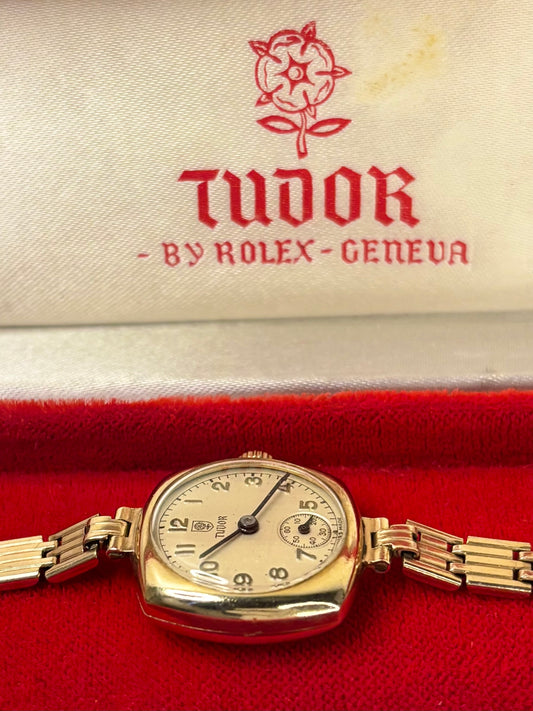
Early wristwatches - worn predominantly by women as decorative pieces - were essentially miniaturised pocket watch movements fitted into small cases with lugs for a bracelet or strap. The practical challenges of making a reliable mechanical movement small enough for the wrist while maintaining accuracy and durability were considerable, and it took decades of incremental improvement to truly solve them.
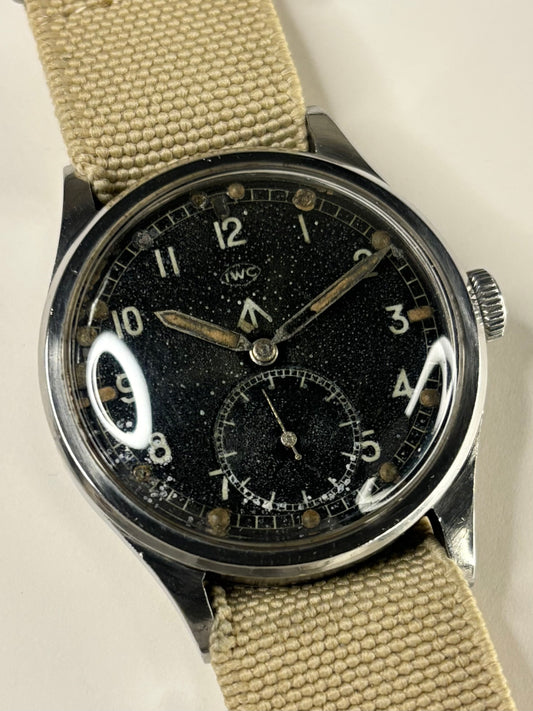
It was the First World War that decisively shifted the wristwatch from a fashionable accessory to a practical necessity. Soldiers on the Western Front quickly discovered that fumbling for a pocket watch in the heat of battle was impractical and dangerous - a watch on the wrist was infinitely more useful. Military contracts drove watchmakers to develop robust, reliable manual-wind calibres in wristwatch sizes at speed, and the industry responded with remarkable ingenuity.
By the end of the war, the wristwatch had established itself as a serious timekeeper, and the manual-wind movement had made the transition to the wrist for good.
The Golden Era - the 1940s, 1950s and 1960s

If there is a period that represents the absolute peak of manual-wind watchmaking for the vintage collector, it is the post-war decades - roughly from the late 1940s through to the mid-1960s.
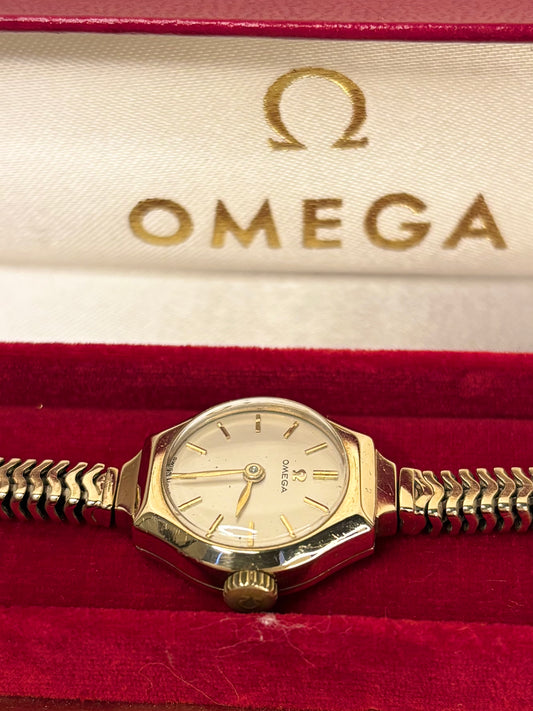
By this point, the Swiss watch industry had refined the manual-wind movement to a genuinely extraordinary standard, typically featuring 17 jewels. The calibres being produced by the major manufacturers of this era - Omega, Rolex, and their contemporaries - were marvels of precision engineering. Thin, beautifully finished, accurate, and durable, these movements represented the culmination of several centuries of accumulated knowledge and craft.
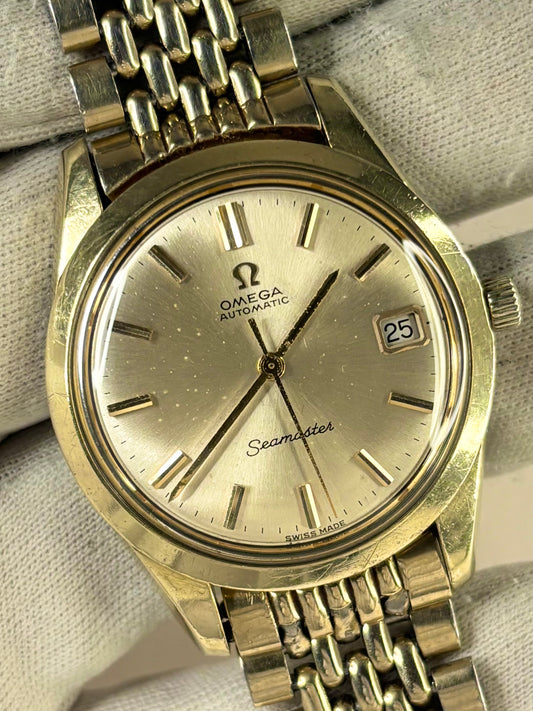
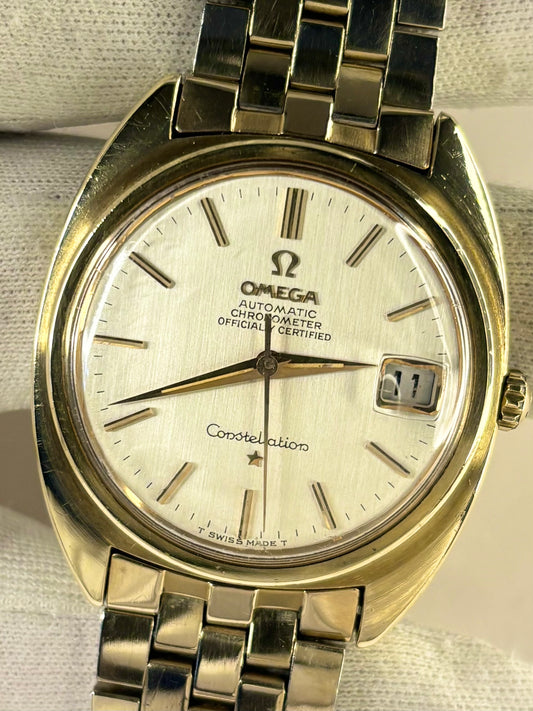
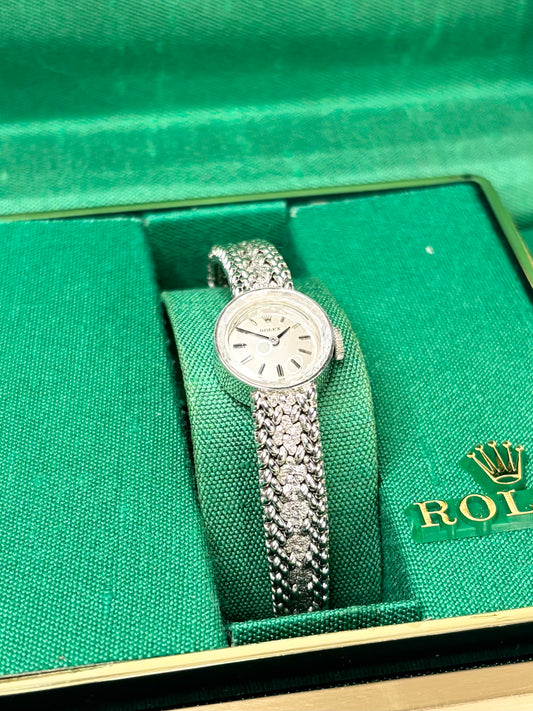
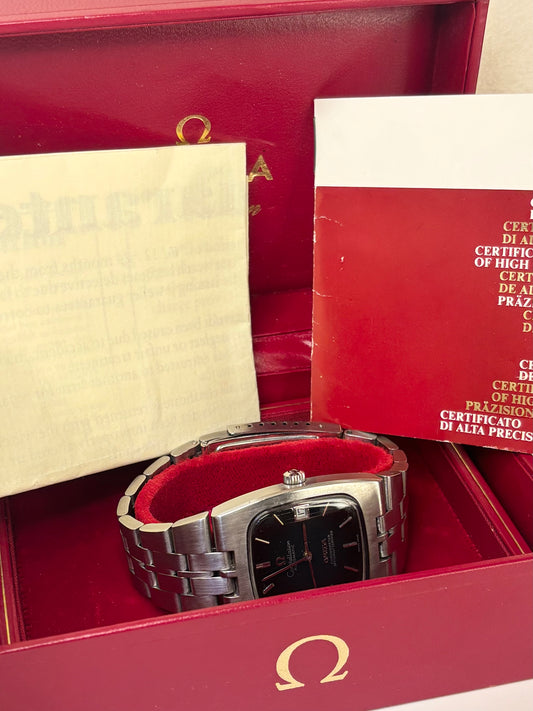
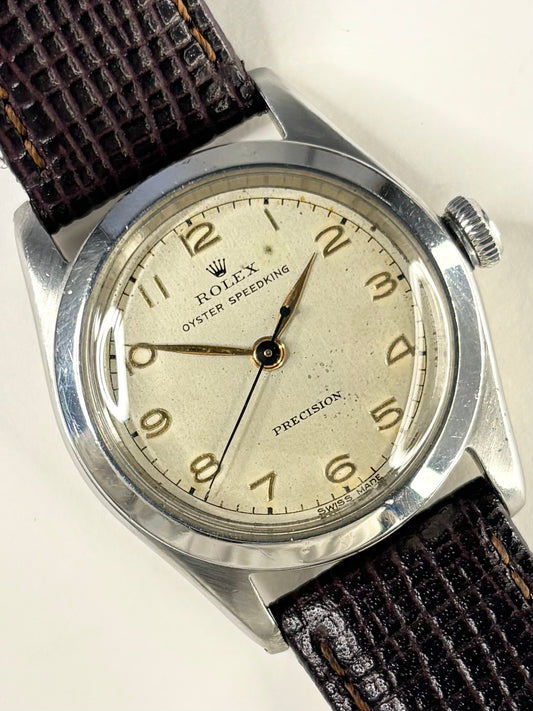
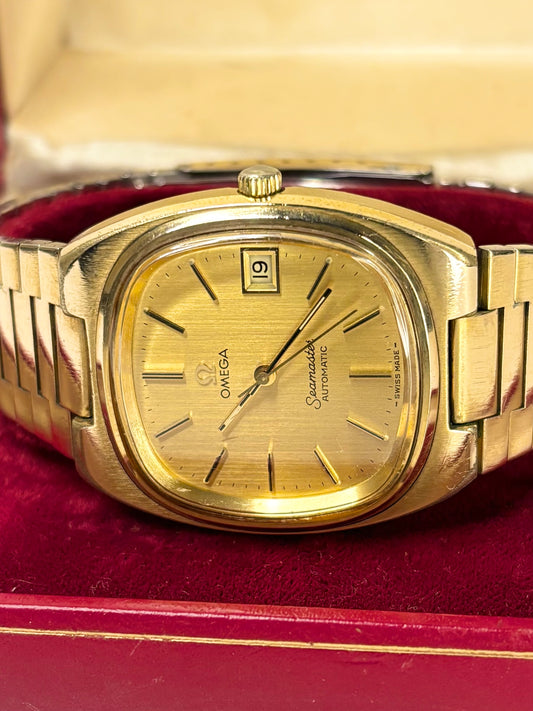
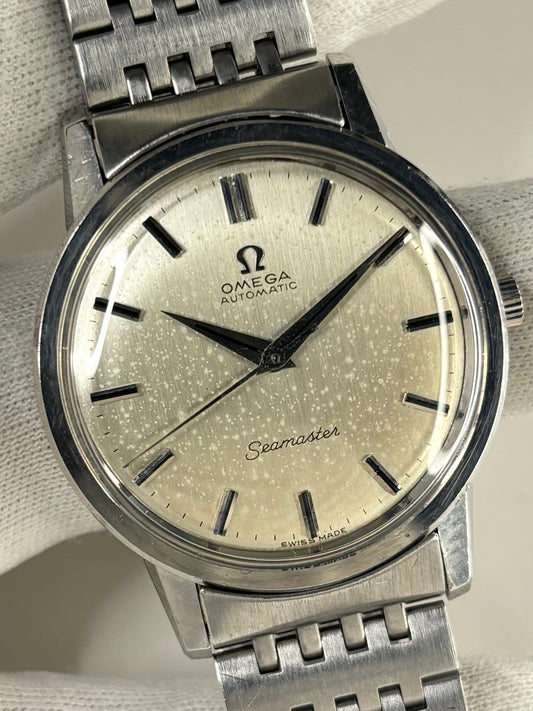
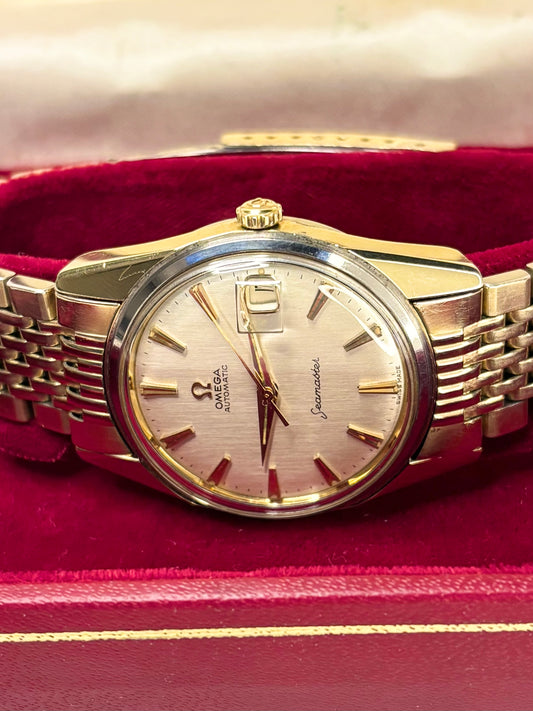
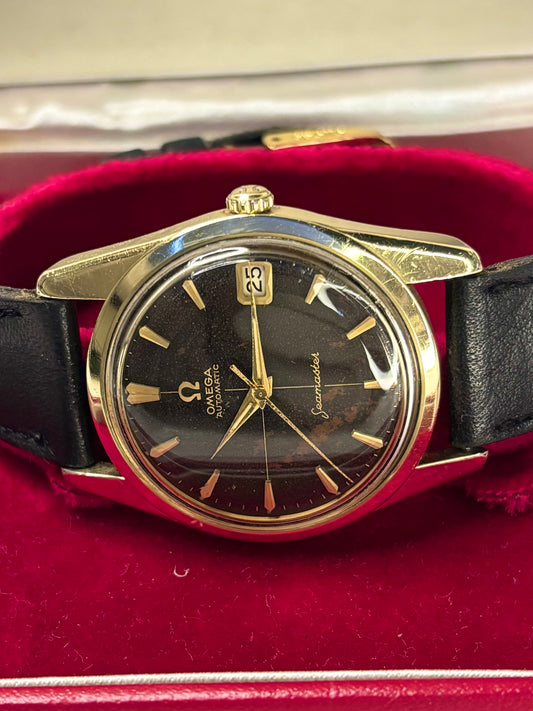
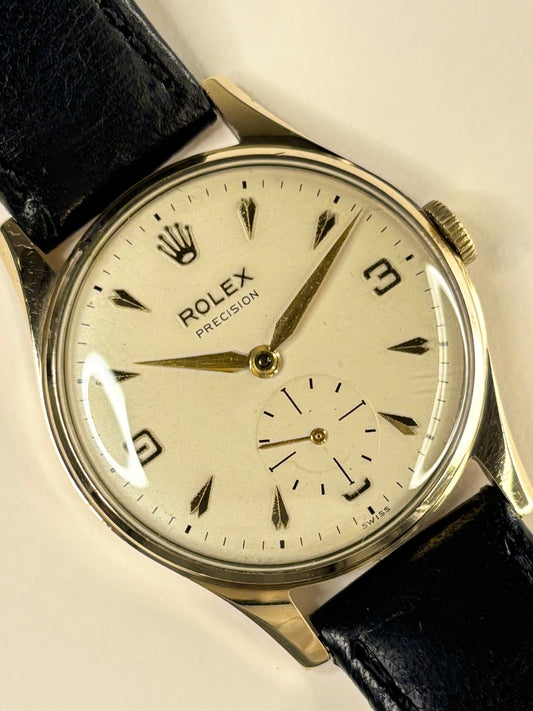
Omega's calibre 283 and 284, produced through the late 1950s and into the 1960s, are wonderful examples of the manual-wind movement at its finest - slim, reliable calibres that powered some of the most beautiful vintage timepieces of the era. Rolex's manual-wind calibres of the same period are equally celebrated, combining precision timekeeping with a level of robustness that has allowed many examples to keep running reliably for sixty or seventy years with only periodic servicing.
The dials that sat above these movements - the gilt dials, the applied index dials, the clean textured surfaces of the period - were designed with the manual-wind format in mind. There was no rotor to accommodate, which meant movements could be made extraordinarily slim, and cases could be kept thin and elegant in a way that was simply not possible with a full automatic movement.
Browse our collection of vintage manual-wind timepieces today!
The Arrival of the Automatic - and What Changed

The automatic movement - one that winds itself through the motion of the wearer's wrist via a rotating rotor - had existed in various forms since the late 18th century, but it was through the 1950s and 1960s that it became truly refined and widely accessible.
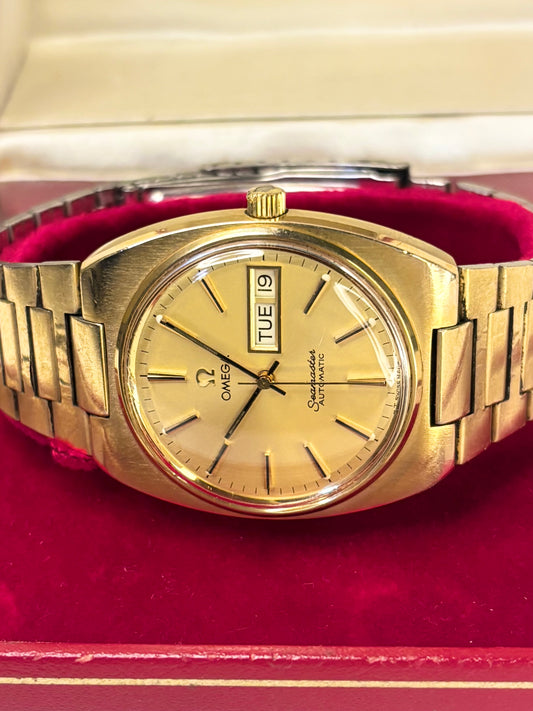
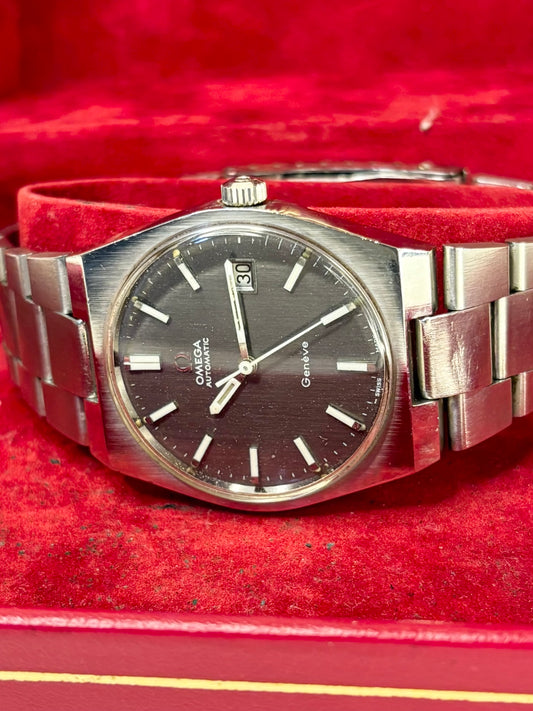
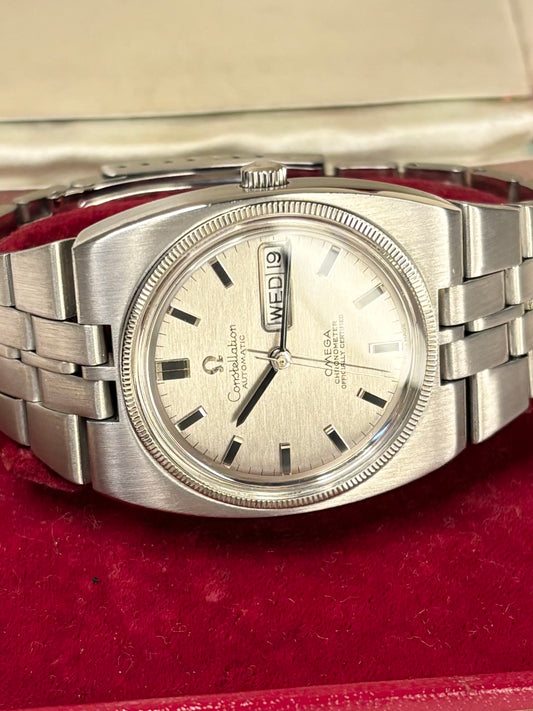
The appeal was obvious. A watch that never needed winding was a genuinely convenient thing, and as the automatic movement improved in reliability and slimness, it gradually became the dominant format across the Swiss watch industry. By the late 1960s and into the 1970s, the majority of new watch releases from the major manufacturers were automatic rather than manual-wind - and the golden era of the hand-wound movement had quietly passed.
This shift was not an abandonment of quality - many automatic movements of the 1960s and 1970s are outstanding calibres in their own right. But it did mark a genuine turning point, and the manual-wind movements that had defined watchmaking for five centuries began their transition from the mainstream to the cherished.
And Then There Was Quartz

The seismic event that truly reshuffled the entire mechanical watch industry - manual-wind and automatic alike - arrived in the form of the quartz movement in the late 1960s and early 1970s.
Quartz watches kept time with an accuracy that no mechanical movement could match, and they could be produced at a fraction of the cost. The Swiss watch industry, which had dominated global watchmaking for generations on the strength of its mechanical expertise, faced an existential threat. Tens of thousands of jobs were lost. Entire segments of the market disappeared almost overnight. This period became known as the Quartz Crisis - and it came very close to ending the tradition of mechanical watchmaking entirely.
That it did not is in large part down to collectors, enthusiasts, and a growing appreciation for the irreplaceable character of a well-made mechanical movement. The very qualities that made manual-wind movements seem old-fashioned in the age of quartz - their finite power reserve, their need for daily attention, their visible, audible mechanical heartbeat - gradually came to be understood not as limitations but as features. The manual-wind movement survived, and ultimately thrived again, because it offered something that no quartz oscillator ever could.
Why Collectors Love Manual-Wind Movements Today
Ask a serious vintage watch collector why they love a manual-wind timepiece, and you will get a different answer from everyone you ask - but certain themes come up again and again.
There is the ritual, first of all. That daily act of winding connects you to the watch in a way that is genuinely irreplaceable. It demands a small moment of attention, a pause in the day, a conscious acknowledgement of the object on your wrist. In a world of passive, self-sufficient devices, there is something genuinely valuable about a timekeeper that asks something of you.
There is the slimness - manual-wind movements, without the bulk of an automatic rotor, allow for cases of extraordinary thinness. Some of the slimmest and most elegant vintage dress watches ever made are powered by hand-wound calibres, and that slim profile under a shirt cuff is a pleasure that never gets old.
And there is the history. Every manual-wind movement you encounter today is the direct descendant of five hundred years of accumulated human ingenuity - from the first coiled mainspring in a 15th century workshop, through the great pocket watches of Breguet and his contemporaries, through the military wristwatches of two world wars, to the refined and beautiful calibres of the 1950s and 1960s. Winding a vintage manual-wind timepiece is, in its own small way, an act of connection to all of that.
At AR Collectables, manual-wind vintage timepieces hold a very special place in our collection, as discussed in our complete guide to vintage watch movements. Every piece is handpicked, cleaned, and tested - and we genuinely love talking about the movements inside them. If you have any questions about a specific piece, drop us a message any time. 🤝
Browse our full collection of vintage timepieces today!