
What is a Gold-Filled Watch? Gold-Plated vs Gold-Filled vs Solid Gold Explained
If you have ever shopped for a vintage watch, you will have noticed that gold watches are described in a confusing variety of ways - gold-plated, gold-filled, rolled gold, gold-capped, solid gold. They all sound rather similar, but they mean quite different things, and the differences matter a great deal when it comes to durability, value, and what you are actually buying. So what exactly is a gold-plated watch, and how does it compare to the alternatives? Here is everything you need to know.
What is a Gold-Plated Watch?

A gold-plated watch is one in which a base metal case - usually brass or stainless steel - has been coated with a thin layer of gold through a process called electroplating. The result is a timepiece that has the warm, golden appearance of gold, but at a fraction of the cost of a solid gold piece, because only a very thin layer of actual gold is used.
Electroplating works by using an electric current to bond a fine layer of gold onto the surface of the base metal. The thickness of this layer is measured in microns, and you will sometimes see a vintage watch marked with a figure such as 10 or 20 microns, indicating the depth of the gold plating. The higher the micron figure, the thicker the gold layer and the longer it will tend to last before any wear becomes apparent.
Gold-plated watches were enormously popular throughout the twentieth century, and many beautiful vintage timepieces from prestigious makers were produced in gold-plated form, offering the look of gold at an accessible price.
How Gold-Plated Compares to Gold-Filled and Solid Gold
This is where the confusion usually arises, so let us clear it up properly. There are really three main categories to understand, plus one more worth knowing about.
Gold-plated is the thinnest application of gold. As described above, a fine layer of gold is electroplated onto a base metal. It looks wonderful, but because the gold layer is thin, it can gradually wear through over many years of use - particularly on the high points of the case that experience the most contact. A gold-plated vintage watch is a lovely thing, but the gold is a surface finish rather than a substantial part of the case.
Gold-filled - also known as rolled gold - is a considerably more substantial and durable construction. Rather than being electroplated, a much thicker layer of gold is mechanically bonded to the base metal under heat and pressure. The amount of gold is regulated and far greater than in plating, which means a gold-filled or rolled gold timepiece will generally wear far better and last far longer than a plated one before any base metal shows through. On vintage watches you will often see this marked as rolled gold or as a figure such as 10k or 14k gold filled. It represents a genuine middle ground between plating and solid gold.
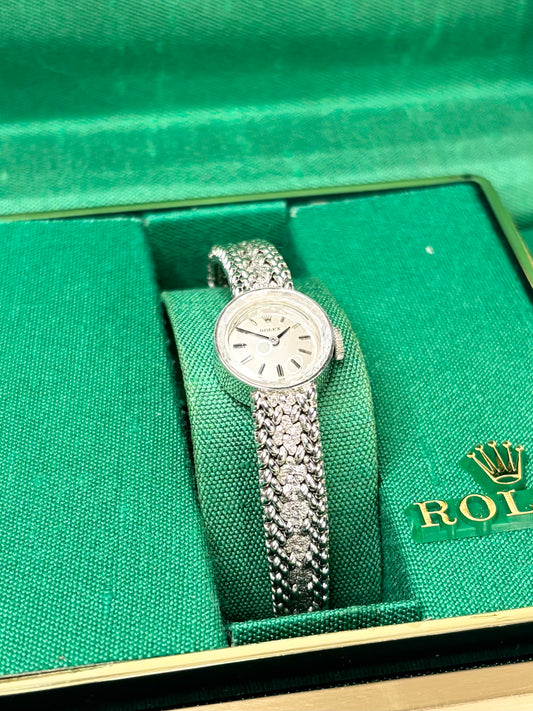
Solid gold is exactly what it sounds like - the entire case is made from a gold alloy, with no base metal beneath. This is measured in carats, most commonly 9ct, 14ct, or 18ct, indicating the proportion of pure gold in the alloy. Solid gold is the most luxurious and most valuable option, both for its substantial gold content and for the fact that it will never wear through. A solid gold vintage Omega or vintage Rolex is a genuinely precious object.
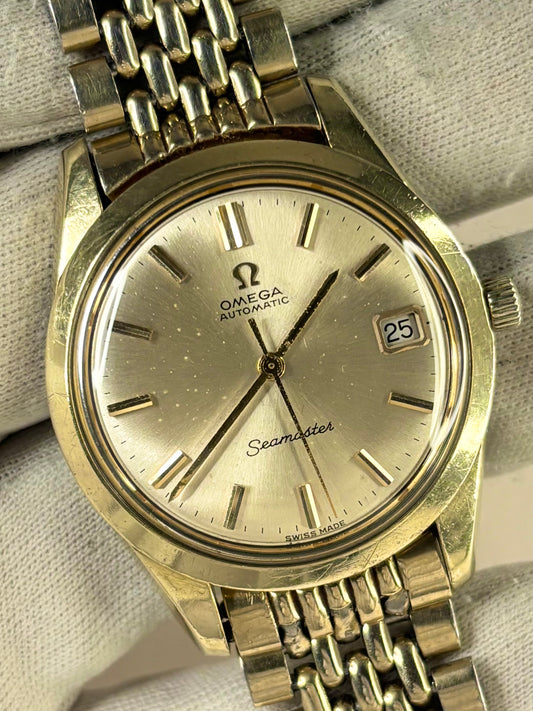
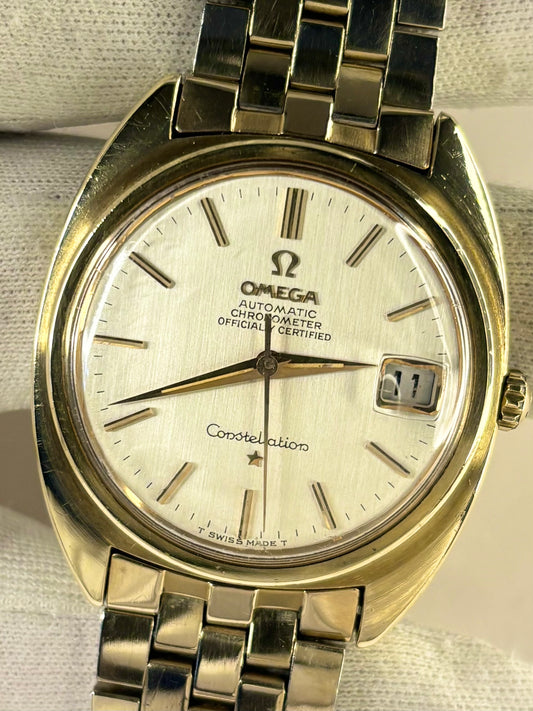
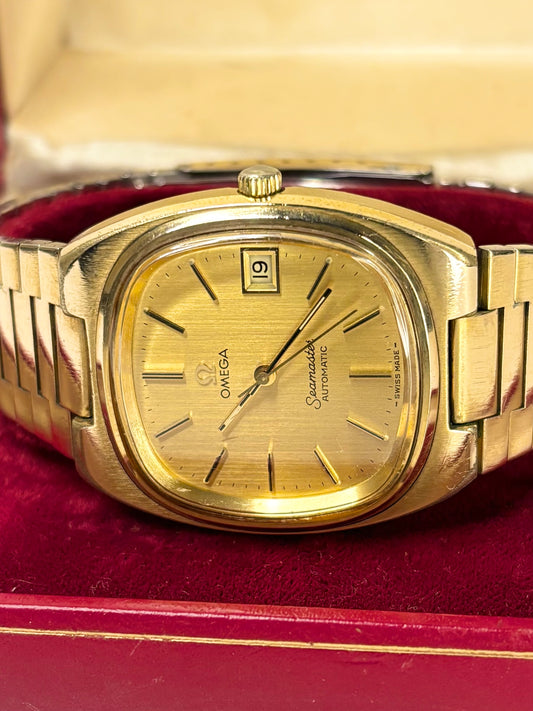
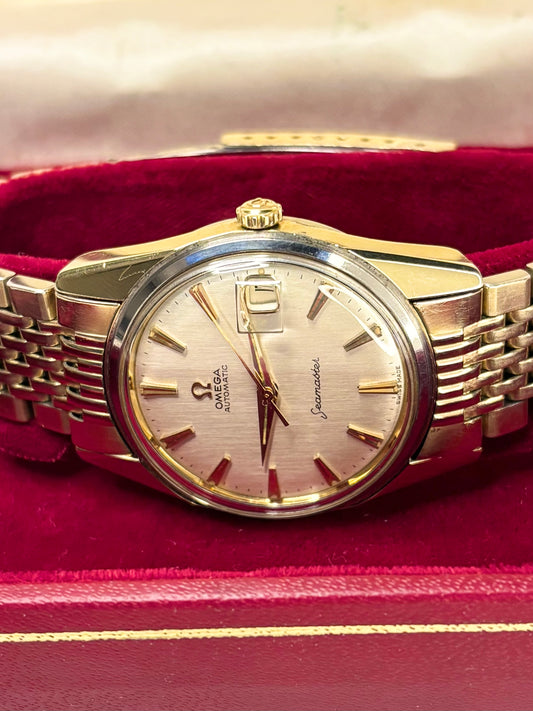
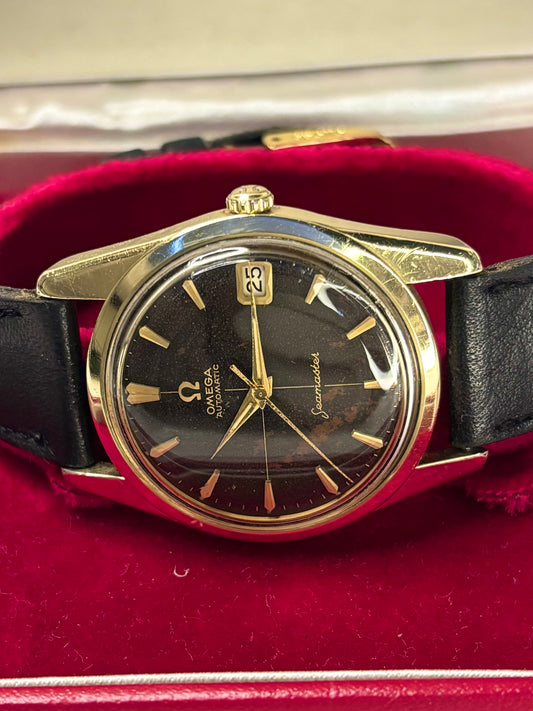
Gold-capped is worth a brief mention too. This is a method, used notably by Omega, in which a solid gold shell or cap is fitted over a steel case - thicker and more substantial than plating, and a high-quality approach that sits between gold-filled and solid gold in terms of durability.
How to Tell Which is Which

The markings on a vintage watch are your best guide. Solid gold pieces will typically carry hallmarks indicating the carat - 9ct, 14ct, 18ct, or their equivalent numerical marks such as 375, 585, or 750. Gold-filled and rolled gold pieces are usually marked accordingly, often with the gold proportion. Gold-plated watches may be marked with a micron figure, or simply described as gold-plated.
If in doubt, a reputable seller will always be able to tell you exactly what a watch is made from - and an honest description of the case material is one of the marks of a trustworthy vintage watch dealer.
Some Lovely Examples from Our Collection

To bring all of this to life, here are a few pieces from the AR Collectables collection that illustrate the different gold constructions beautifully.
A wonderful example of a gold-plated timepiece is the LONGINES Conquest Manual Gold-Plated Watch - 1960's. The Conquest is one of Longines' most celebrated lines, and this classic timepiece shows just how beautiful a quality gold-plated vintage watch can be.
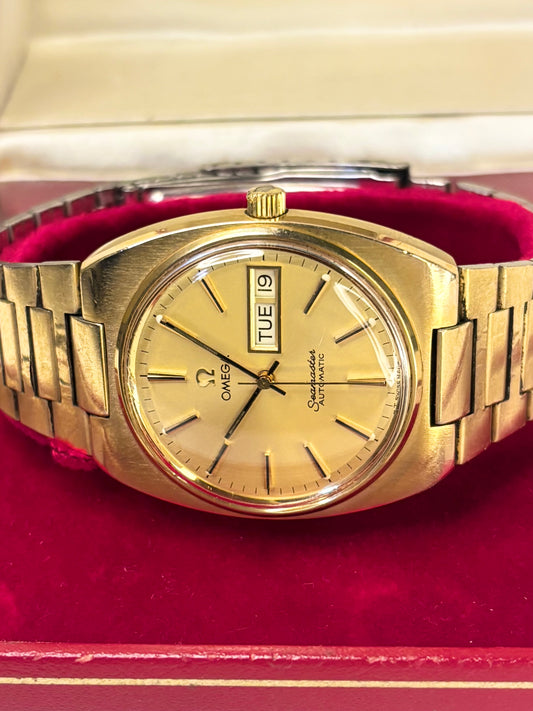
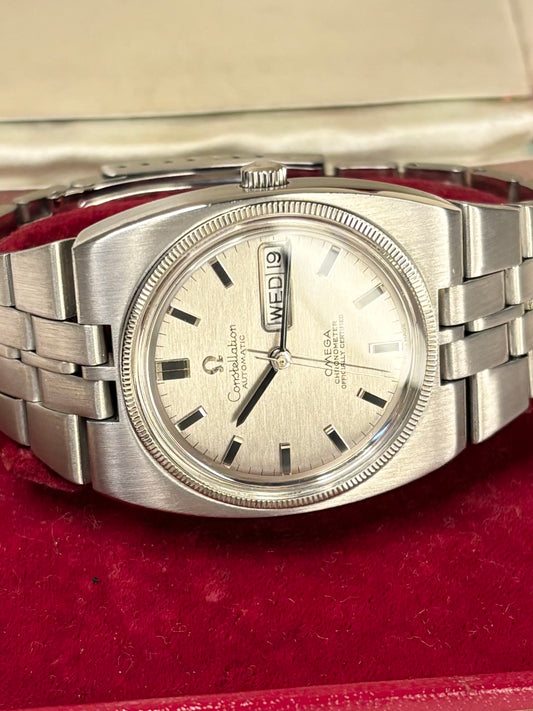
For an example of gold-filled construction, the OMEGA Constellation 10k Gold-Filled - Rare Vintage 1970's Men's Day-Date - Reference 198.0118 is a rare and characterful vintage Omega timepiece, with the durability that gold-filled construction offers and the prestige of the Constellation name.
And for a charming antique-style rolled gold piece, the BULOVA 10k Rolled Gold - Vintage 1950's Boxed Manual Art Deco Tank Dress Watch is a delight - an elegant Art Deco tank-style classic timepiece that shows the lasting quality of rolled gold construction.
Check out our full vintage watch collection today!
A Final Thought
Understanding the difference between gold-plated, gold-filled, and solid gold makes you a far more confident and informed buyer - and it ensures you always know exactly what you are getting. Whether you are drawn to the accessible elegance of a gold-plated classic timepiece or the precious substance of a solid gold vintage Omega watch, the most important thing is to buy from a seller who describes their pieces honestly.
At AR Collectables, we always describe the case material of every piece accurately and clearly. If you have any questions, or are looking to buy a vintage watch in gold-plated, gold-filled, or solid gold, just drop us a message - we would love to help. 🤝
Check out our full vintage watch collection today!