
What is a Mineral Crystal? A Vintage Watch Guide
If you have looked into watch crystals, you will have come across the mineral crystal - one of the three main materials used for the clear cover that protects a watch dial. Sitting between acrylic and sapphire in both hardness and character, the mineral crystal is genuinely common, and worth understanding. But what exactly is a mineral crystal, and what are its strengths and limitations? Here is everything you need to know.
What is a Mineral Crystal?
A mineral crystal is a watch crystal made from hardened mineral glass - essentially a form of glass that has been treated to increase its hardness and resistance to scratching. It is one of the three main crystal materials, alongside acrylic and sapphire, as we explore in our complete guide to vintage watch crystals.
The mineral crystal became increasingly common from the later twentieth century onwards, offering a genuine step up in scratch resistance over traditional acrylic, while remaining more affordable than premium sapphire. It occupies a genuine middle ground between the two, and it is found on a great many watches.
The Advantages of a Mineral Crystal
The mineral crystal has several genuine virtues. Its greatest advantage over acrylic is its hardness - being made of hardened glass, a mineral crystal is considerably more resistant to scratching than a softer acrylic one, so it stands up better to the everyday knocks and scuffs of ordinary wear.
It is also affordable. Mineral glass is considerably cheaper than sapphire, which makes it a genuinely cost-effective choice, offering good scratch resistance without the premium price of sapphire. And it has a clear, bright appearance, giving a clean, glassy look to the watch. For a great many watches, the mineral crystal offers a genuinely sensible balance of qualities.
The Limitations of a Mineral Crystal

The mineral crystal does have its trade-offs, and it is worth understanding them. Being made of glass, a mineral crystal is more prone to cracking or shattering under a hard impact than a shatter-resistant acrylic crystal, which will tend to survive a knock that might crack glass.
Its other main limitation concerns scratches. While a mineral crystal resists scratching better than acrylic, once it does acquire a scratch, that scratch cannot simply be polished out in the way an acrylic scratch can, as we explain in our guide to removing scratches from an acrylic crystal. A scratched mineral crystal generally needs to be replaced rather than restored. So while it scratches less easily, any scratches it does get are more permanent.
Mineral vs Acrylic vs Sapphire
It helps to understand the mineral crystal in relation to the other two materials. Acrylic, the traditional vintage material, is soft and scratches easily, but is shatter-resistant and its scratches can be polished out. Sapphire, found on higher-end watches, is extremely hard and virtually scratch-proof, but expensive. The mineral crystal sits between the two - harder and more scratch-resistant than acrylic, more affordable than sapphire, but without acrylic's easy repairability or sapphire's near-total scratch resistance.
Each material has its place, and none is simply best - it is a matter of the particular balance of qualities. We compare all three in our complete guide to vintage watch crystals.
Mineral Crystals on Vintage Watches
On vintage watches specifically, it is worth knowing that the great majority use acrylic crystals, which were the standard for most of the twentieth century, as we discuss in our guide to vintage watch crystals. Mineral crystals are more associated with later watches, as glass crystals became more widespread towards the end of the century and beyond.
So on a genuinely vintage watch, you are more likely to encounter an acrylic crystal than a mineral one - though mineral crystals do appear, particularly on later vintage pieces. Understanding the difference helps you know exactly what you are looking at, and how best to care for it.
A Genuine Vintage Watch From Our Collection
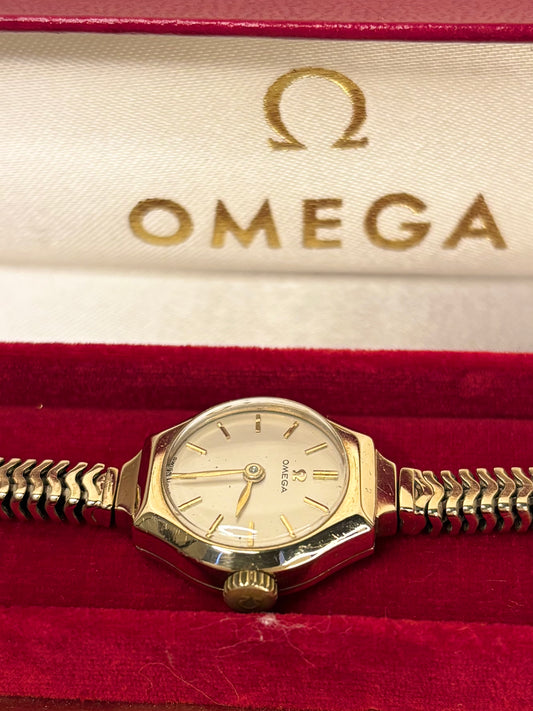
The OMEGA Genève Ladies - Vintage 1970's Manual Gold Watch - Reference 511.0451 is a lovely example of a genuine vintage Omega - exactly the kind of characterful timepiece whose crystal is a genuine part of its charm, and which rewards a little care to keep looking its best.
Check out our full vintage watch collection today!
A Final Thought
So, what is a mineral crystal? It is a watch crystal made of hardened mineral glass, offering a genuine middle ground between soft, polishable acrylic and premium, ultra-hard sapphire - harder and more scratch-resistant than acrylic, more affordable than sapphire, though more prone to cracking and unable to have its scratches polished out. Understanding it helps you know exactly what protects your watch's dial, and how best to look after it. Each crystal type has its own character and virtues, and knowing the difference is part of the genuine pleasure of understanding vintage watches.
At AR Collectables, every vintage timepiece in our collection is handpicked, cleaned, and tested. If you have any questions about the crystal on a specific piece, or are looking to buy a vintage watch to treasure, just drop us a message - we would love to help. 🤝