
What is a Sapphire Crystal? A Watch Guide
Among the three main materials used for watch crystals, the sapphire crystal is the hardest, clearest, and most prestigious. Prized for its extraordinary scratch resistance and premium quality, it is the crystal of choice for many of the finest watches. But what exactly is a sapphire crystal, what makes it so special, and what should you know about it on a vintage watch? Here is everything you need to know.
What is a Sapphire Crystal?
A sapphire crystal is a watch crystal made from synthetic sapphire - a laboratory-grown version of the same material as the natural gemstone, produced specifically for industrial and watchmaking use. It is one of the three main crystal materials, alongside acrylic and mineral glass, as we explore in our complete guide to vintage watch crystals.
Despite the luxurious name, the sapphire used in watch crystals is not a precious gemstone in the jewellery sense, but a synthetic material created for its exceptional hardness and clarity. It is the hardest and most scratch-resistant of all the crystal materials, and it is found on many higher-end and more modern watches.
The Great Advantage - Scratch Resistance
The single greatest virtue of the sapphire crystal is its extraordinary hardness and scratch resistance. Synthetic sapphire is one of the hardest materials used in watchmaking - so hard that it is virtually impossible to scratch in normal everyday wear.
This is a genuine advantage. Where an acrylic crystal scratches relatively easily, and even a mineral crystal can be scratched, a sapphire crystal will shrug off the everyday knocks, scuffs, and contact that would mark other crystals, staying clear and pristine for years. For anyone who wants a watch that stays looking flawless with minimal worry, the scratch resistance of sapphire is a genuine and lasting benefit.
The Clarity and Quality of Sapphire
Beyond its hardness, sapphire has a wonderfully clear, bright, and premium quality. It offers excellent optical clarity, giving a clean, crisp view of the dial, and it has a genuine sense of quality and refinement that befits the finer watches it typically adorns.
Sapphire crystals are often treated with anti-reflective coatings on higher-end watches, further improving their clarity. This combination of exceptional hardness and premium clarity is why sapphire is the crystal of choice for so many of the world's finest timepieces, and why a sapphire crystal is generally considered a mark of quality.
The Trade-Offs of Sapphire
Sapphire does have its trade-offs, and it is worth understanding them. The main one is cost - sapphire is considerably more expensive than both acrylic and mineral glass, which is why it is generally reserved for higher-end watches.
It is also worth knowing that, despite its extraordinary hardness, sapphire is not indestructible. Like mineral glass, and unlike shatter-resistant acrylic, a sapphire crystal can potentially crack or shatter under a sufficiently hard, sharp impact - its hardness makes it scratch-resistant, but hardness and shatter-resistance are not the same thing. And, as with mineral glass, a damaged sapphire crystal cannot be polished and must be replaced, unlike an acrylic crystal whose scratches can often be removed, as we explain in our guide to removing scratches from an acrylic crystal.
Sapphire vs Acrylic vs Mineral

It helps to understand sapphire in relation to the other two crystal materials. Acrylic, the traditional vintage material, is soft and scratches easily, but is shatter-resistant and its scratches polish out. Mineral glass sits in the middle - harder than acrylic, more affordable than sapphire, as we discuss in our guide to mineral crystals. Sapphire is the hardest and most scratch-resistant of all, and the most premium, but also the most expensive.
Each material has its place, and none is simply best in every respect - it is a matter of the particular balance of qualities. We compare all three in our complete guide to vintage watch crystals.
Sapphire Crystals on Vintage Watches
On vintage watches specifically, it is worth knowing that genuine sapphire crystals are relatively uncommon. For most of the twentieth century, acrylic was the standard crystal material, as we discuss in our guide to vintage watch crystals, with sapphire becoming more widespread on higher-end and more modern watches later on.
So on a genuinely vintage watch, you are far more likely to encounter an acrylic crystal, with its warm, domed, period charm, than a sapphire one. A vintage watch with a genuine sapphire crystal is more likely to be a later or higher-end piece. Understanding this helps you know exactly what you are looking at, and what to expect.
A Genuine Vintage Watch From Our Collection
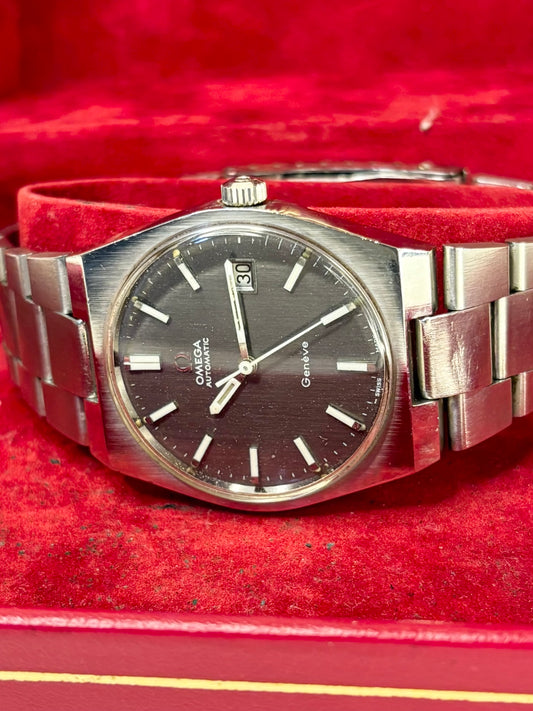
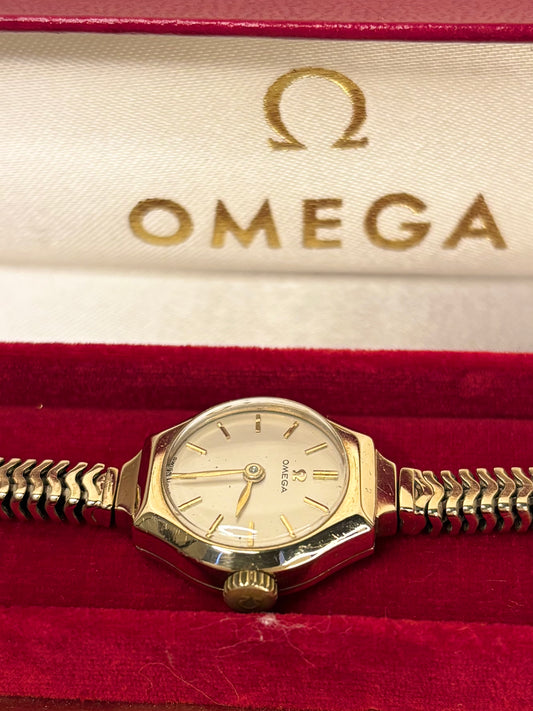
The OMEGA Genève Ladies - Vintage 1960's Silver Watch is a lovely example of a genuine vintage Omega - exactly the kind of characterful vintage timepiece whose crystal is a genuine part of its period charm, and which rewards a little care to keep looking its best.
Check out our full vintage watch collection here!
A Final Thought
So, what is a sapphire crystal? It is a watch crystal made from synthetic sapphire - the hardest, clearest, and most scratch-resistant of all the crystal materials, prized for staying flawless through years of wear, and a genuine mark of quality on the finer watches it adorns. More expensive than acrylic or mineral glass, and less common on genuinely vintage watches, it nonetheless represents the premium end of crystal technology. Understanding it, and how it compares to acrylic and mineral, helps you appreciate exactly what protects your watch's dial.
At AR Collectables, every vintage timepiece in our collection is handpicked, cleaned, and tested. If you have any questions about the crystal on a specific piece, or are looking to buy a vintage watch to treasure, just drop us a message - we would love to help. 🤝