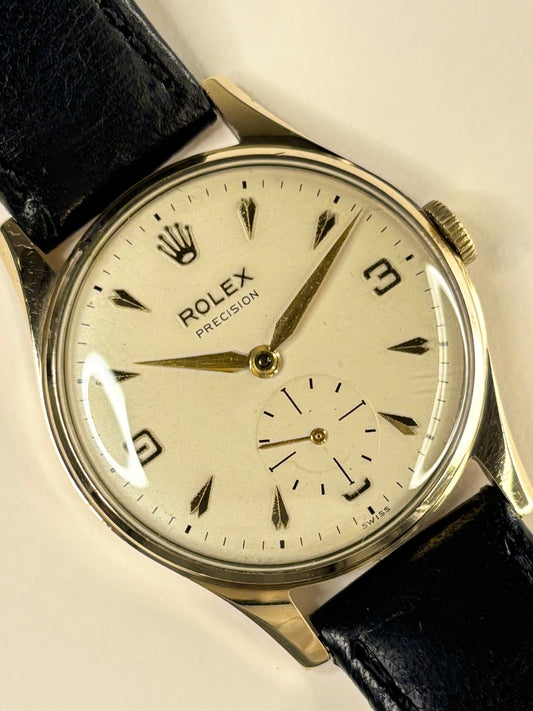

How Often Should a Vintage Watch Be Serviced? An Insiders Guide
It is a question that comes up regularly among vintage watch owners, and one that generates a surprising amount of conflicting advice online. Some sources will tell you every three to five years. Others say five to seven. The honest answer, particularly for a well-made vintage timepiece that is already running well, is that you probably do not need to rush to the watchmaker anywhere near as often as you might have been led to believe.
The Straightforward Answer

A vintage watch that is keeping good time, running smoothly, and showing no signs of erratic behaviour does not need to be serviced on a rigid schedule. Most experienced collectors and watchmakers would suggest that a well-maintained vintage movement running correctly can go anywhere from seven to ten years between services without any cause for concern - and in many cases even longer, provided the watch is behaving itself.
The five-year rule that gets repeated frequently online is, frankly, on the cautious side for a vintage watch that is already in good health. It may have made more sense in an era when lubricants degraded more quickly, but modern watchmaking oils used in contemporary services are considerably more stable and long-lasting than their predecessors. A quality service carried out properly by a skilled watchmaker should keep a vintage movement running happily for a good decade in normal circumstances.
What Actually Tells You a Service is Due
Rather than watching the calendar, the more sensible approach is to let the watch itself tell you when it needs attention. The signs to look out for are straightforward.
If the watch is losing or gaining noticeably more time than it used to, that is a signal worth taking seriously - particularly if the change has been gradual rather than sudden. A movement that has been running accurately for years and begins to drift is a movement telling you that something has changed internally, and lubrication is the most common culprit.
If the watch stops unexpectedly and restarting it does not resolve the issue, or if the power reserve seems shorter than it once was, those are further indications that a service is worth considering.
If you can hear any unusual sounds - grinding, irregular ticking, anything that sounds different from the normal running of the movement - do not ignore it. A mechanical issue caught early is a considerably cheaper and simpler fix than one left to develop.
Of course, if you notice any fresh water damage to the dial or the mechanism, we suggest nipping down to your local watchmaker as soon as possible!
Outside of these warning signs, a vintage watch that is running well is simply a vintage watch that does not need a service yet. Enjoy it.
What About a Watch You Have Just Purchased?

This is perhaps the most common servicing question among first-time vintage watch buyers, and the answer depends entirely on the condition of the piece you have bought and who you bought it from.
A vintage watch purchased from a reputable seller who has tested it properly and can confirm it is running accurately does not need to march straight to a watchmaker. Every watch in our collection is cleaned and tested over a full 24-hour period before it is listed - so when a watch leaves us, it is running as it should. Unless it starts showing any of the warning signs above, there is absolutely no need to service it immediately after purchase. Sit back, enjoy wearing it, and let it tell you when the time comes!
A vintage watch purchased from an unknown source with no testing or service history is a different matter - in that case, having it looked over by a watchmaker before putting it into regular use is sensible.
A Note on Over-Servicing
It is worth knowing that unnecessary servicing is not a neutral act. Every time a vintage movement is disassembled, there is a small but real risk of introducing new problems - a scratched component, a misaligned part, a jewel disturbed in its setting. A skilled watchmaker minimises these risks, but they never entirely disappear. Servicing a watch that does not need it is not doing it any favours.
The same applies to the originality argument. A vintage movement with original, undisturbed lubrication that is still functioning correctly is in many ways preferable to one that has been through multiple unnecessary services over the years. Originality extends to the inside of the case as much as to the dial and hands.
The bottom line is a simple one - if a vintage watch is running well, leave it alone and enjoy it. Service it when it asks to be serviced, not before.
At AR Collectables, we are always happy to talk through the condition and running of any specific piece in our collection. Just drop us a message. 🤝
Browse our full vintage watch collection today!