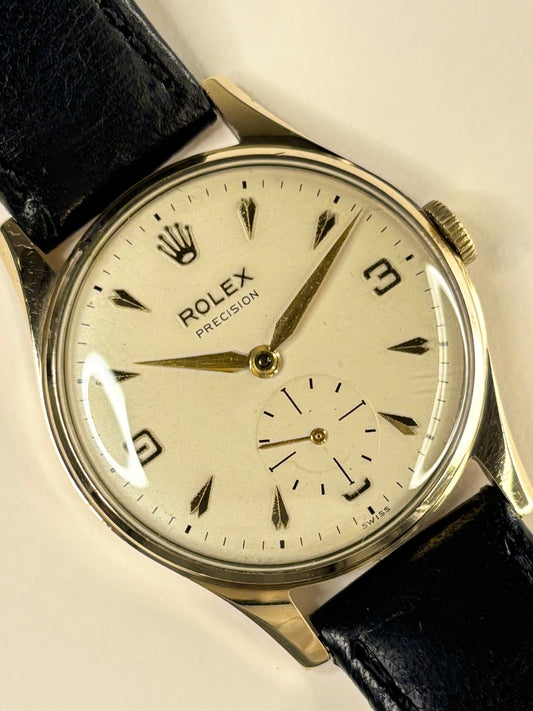

How Accurate Should a Vintage Watch Be? What's Normal and What's Not
It is one of the most common worries among new vintage watch owners. You set your beautiful vintage timepiece against the clock, check it a few days later, and find it has drifted by half a minute or so. Is something wrong? Does it need a service? Have you bought a dud? Or perhaps you've simply measured it wrong? In almost every case, the answer is reassuringly simple - no. A vintage watch is a mechanical object, not a quartz one, and a little drift is not only normal, it is part of the character. But how much drift is acceptable, and when should you actually be concerned? Here is everything you need to know.
The Short Answer - What to Expect

As a realistic and healthy benchmark, a well-maintained vintage watch in good working order should keep time to within around 30 seconds per day. Some excellent examples will do considerably better than this, and a particularly fine, well-cared-for, recently serviced movement may hold to within just a few seconds a day - but as a general rule, anything within roughly half a minute a day is perfectly normal and nothing to worry about for a classic timepiece of the mid-twentieth century. Of course, the timekeeping can be made more precise through the use of a hacking seconds mechanism - a feature that stops the seconds hand, and indeed the entire movement, when the crown is pulled out to the time-setting position
For genuinely old watches - those over about 80 years of age, taking us into pre-war and antique watch territory - expectations should be relaxed further. A timepiece of this age performing within around 60 to 120 seconds per day is doing perfectly well. These older movements were made to the standards of their era, with less advanced regulating systems than later watches, and a wider margin is entirely reasonable and expected.
The key thing to understand is that mechanical accuracy is a spectrum, and the age and design of the movement set realistic expectations. A 1960s vintage Omega will generally be capable of tighter accuracy than a 1930s antique watch - and both can be perfectly healthy.
Why Vintage Watches Drift - the Mechanical Reality
To understand vintage watch accuracy, it helps to understand how a mechanical watch keeps time in the first place. Unlike a quartz watch - which uses a crystal vibrating at over 32,000 times per second to achieve extraordinary precision - a mechanical timepiece relies on a balance wheel swinging back and forth, regulated by a delicate hairspring. It is a marvel of engineering, but it is a physical, mechanical system, and it is subject to all the small variables of the physical world.
This is not a flaw - it is the very nature of the thing. A mechanical vintage timekeeper is a tiny machine doing an extraordinary job, and the gentle drift of a few seconds a day is simply the honest signature of that mechanism at work. Many collectors come to love it as part of the charm.
The Factors That Affect Accuracy
Several things influence how accurately a vintage watch runs on any given day, and understanding them explains a great deal.
Position matters more than most people realise. A mechanical movement runs at very slightly different rates depending on its orientation - dial up, dial down, crown up, and so on - because gravity acts on the balance wheel differently in each position. This is known as positional variance, and it is why a watch can gain time one day and lose it the next, depending on how it has been worn and rested.
The state of wind has an effect too. A mechanical watch tends to run most accurately when the mainspring is well wound and delivering consistent power. As the power reserve runs down, accuracy can drift - so a watch that is allowed to wind down each day may keep poorer time than one kept fully wound.
Temperature plays a part, as the metals in the movement expand and contract very slightly with heat and cold, subtly altering the rate.
And then there is magnetism - one of the most common and most overlooked culprits of all.
The Hidden Culprit - Magnetism
If a vintage watch suddenly starts running noticeably fast - gaining minutes rather than seconds - magnetism is very often to blame. We live surrounded by magnetic fields, from speakers and fridge doors to phones, laptops, and tablet covers, and a vintage timepiece can easily become magnetised through everyday contact with these objects.
When the hairspring of a watch becomes magnetised, its coils can stick together slightly, effectively shortening it and causing the watch to run fast - sometimes dramatically so. The good news is that this is one of the easiest problems to fix. A watchmaker can demagnetise a watch in a matter of moments with a simple tool, and the accuracy is usually restored immediately. If your previously reliable vintage watch has suddenly started gaining time, magnetism is well worth ruling out before assuming anything more serious. Of course, if a vintage watch is marked 'antimagnetic', this largely protects the mechanism from magnetism; a real consideration when purchasing a vintage watch.
Two Examples of Precision from Our Collection

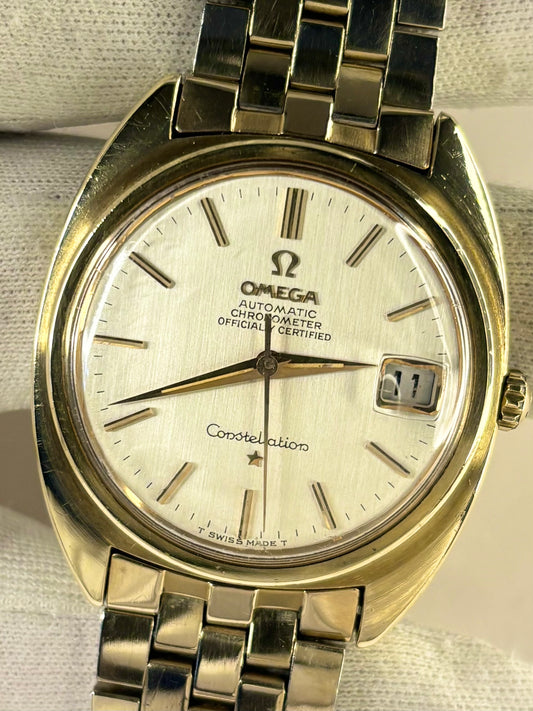
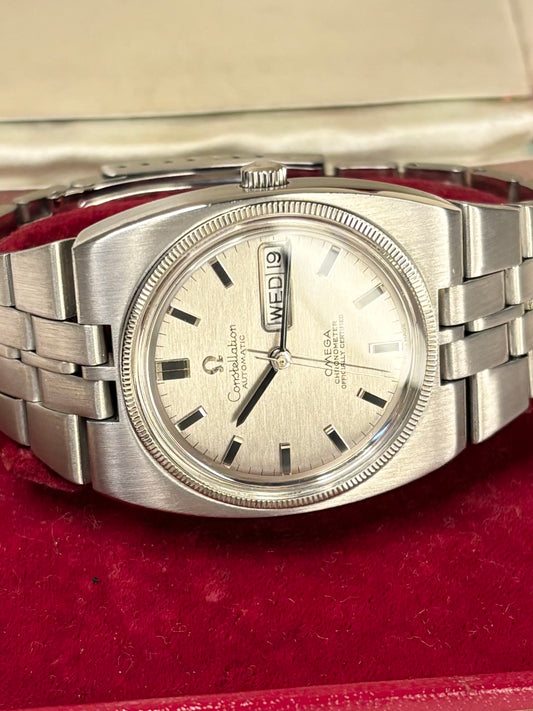
Some vintage watches were built specifically with accuracy in mind. The vintage Omega Constellation, for instance, was a certified chronometer line - every example independently tested and certified to the most demanding accuracy standards of its day, as we explore in our guide to what a chronometer is.
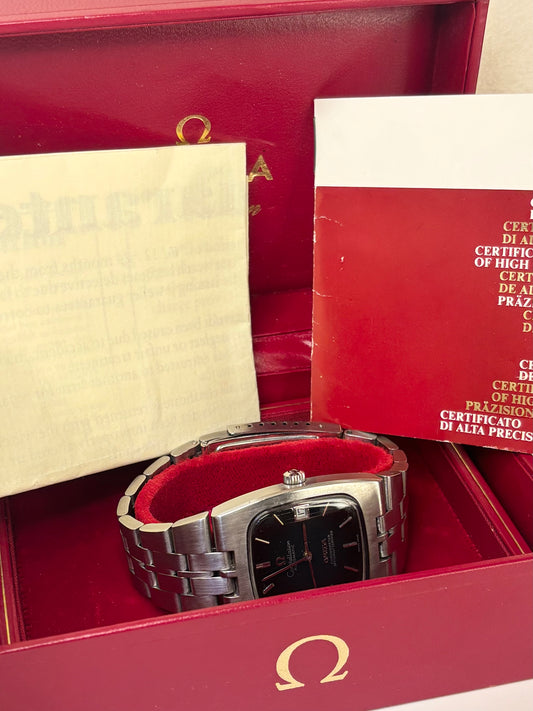
The OMEGA Constellation Pie-Pan - Box and Papers - Vintage 1960's Automatic Date - Reference 168.004 is a beautiful example of one of these certified chronometers - a classic vintage Omega timepiece built to a genuinely high standard of precision, complete with its box and papers.
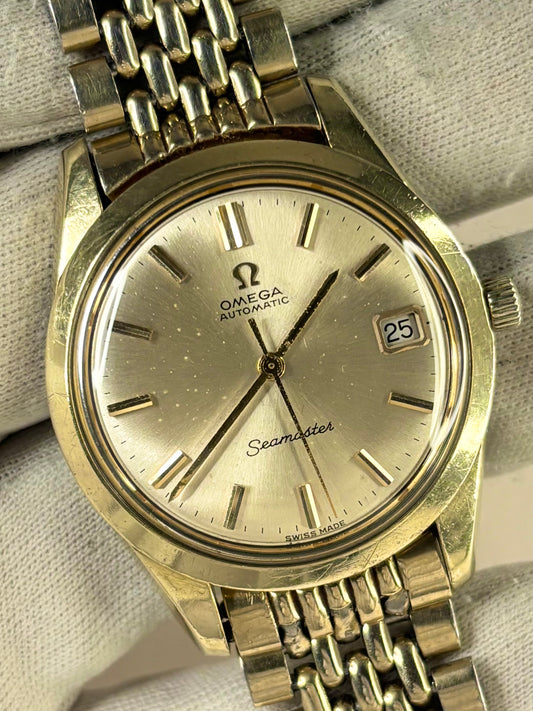
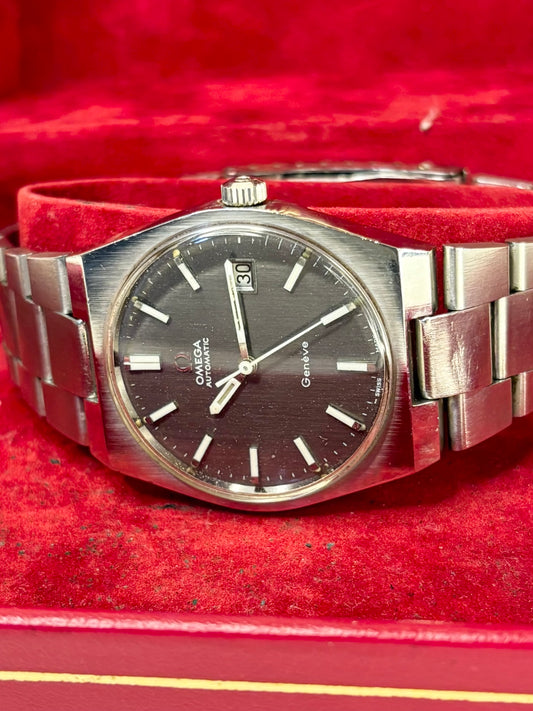
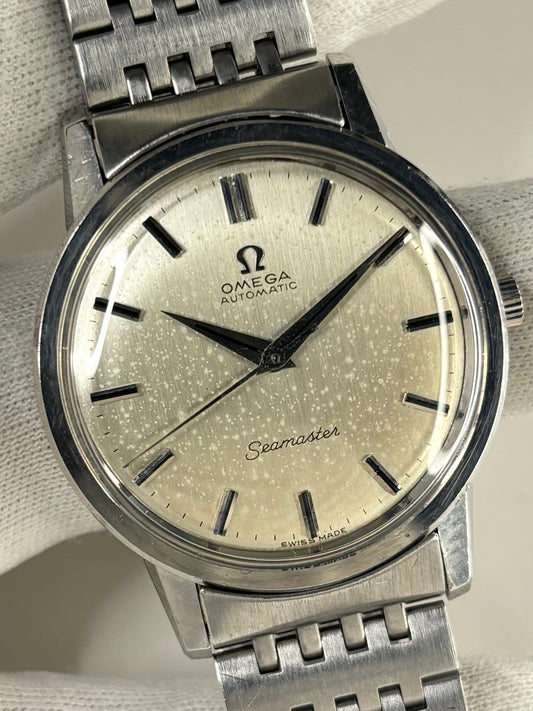
For a wonderful everyday automatic, the OMEGA Automatic Silver Watch - Vintage 1960's - Reference 161.009 is a lovely, dependable vintage Omega timepiece from the brand's golden era of movement-making - exactly the sort of well-engineered classic watch that rewards its owner with reliable timekeeping.
Check out our full vintage Omega collection today!
When You Should Actually Be Concerned
While a little drift is entirely normal, there are a few signs that genuinely do warrant attention. If a watch suddenly changes its behaviour - losing or gaining far more than it used to - that is worth investigating, with magnetism the first thing to rule out. If it runs erratically, speeds up and slows down unpredictably, or stops intermittently, those can indicate a movement in need of a service. And if the power reserve seems much shorter than it should be, that too is worth a quality watchmaker's attention. Furthermore, if the watch doesn't feature a shock resisting mechanism, such as an Incabloc mechanism, and it takes a harsh knock, this may have damaged the internal movement.
Outside of these signs, a vintage watch quietly keeping time to within its expected range is simply doing its job - and doing it beautifully.
A Final Thought
A vintage timepiece that drifts a few seconds a day is not a fault to be fixed but a character to be enjoyed, a reminder that you are wearing a tiny mechanical marvel made decades ago and still faithfully ticking. Set it against the clock now and then, give it a wind, and enjoy it for what it is.
At AR Collectables, every vintage timepiece in our collection is cleaned and tested for timekeeping over a 24-hour period before listing, so you can buy with confidence. If you would like to know more about a specific piece, or are looking to buy a vintage Omega watch or vintage Rolex timepiece, just drop us a message - we would love to help. 🤝
Check out our full vintage watch collection today!