
What Does 'Antimagnetic' Mean on a Vintage Watch?
Among the various pieces of text you might find printed on a vintage watch dial, one that often puzzles owners is Antimagnetic. It sits there alongside the maker's name, quietly declaring something about the watch - but what? Why would a watch need to be antimagnetic, and what does it actually mean? The answer reveals a genuine and often overlooked enemy of the mechanical watch. Here is everything you need to know.
What Does Antimagnetic Mean?
When a vintage watch dial says Antimagnetic, it means the watch was built with some resistance to the effects of magnetism - designed to keep running accurately even when exposed to magnetic fields that would disrupt a less protected watch.
Like the Shock Resisting marking found on many vintage dials, Antimagnetic was a genuine selling point and a mark of quality in its day - a way of reassuring the buyer that the watch was engineered to cope with one of the real hazards a mechanical timepiece faces. Far from being a concern, it is a sign of a thoughtfully made watch.
Why is Magnetism a Problem for Watches?
This is the crucial thing to understand, because magnetism is one of the most common and most overlooked causes of a mechanical watch running poorly.
The heart of a mechanical watch is the balance wheel and its hairspring - a tiny, delicate coiled spring that governs the timekeeping. This hairspring is usually made of metal, and metal can become magnetised. When a hairspring becomes magnetised, its coils begin to cling together slightly as it expands and contracts, which effectively shortens it - and this causes the watch to run fast when it is measured, sometimes dramatically so, gaining minutes rather than seconds.
In the modern world, this is a bigger risk than ever. We are surrounded by magnetic fields - from speakers and fridge doors to phones, tablets, laptops, and the magnetic clasps on bags and cases. A mechanical watch that comes into contact with these can easily become magnetised, as we discuss in our guide to how accurate a vintage watch should be. It is one of the first things to suspect when a previously reliable watch suddenly starts gaining time.
How Does an Antimagnetic Watch Work?
An antimagnetic watch is built to resist these effects, and there are a couple of ways this was achieved.
Some watches used a soft iron inner case - an additional shield surrounding the movement that absorbs and redirects magnetic fields away from the delicate parts within. This approach was famously used in dedicated antimagnetic watches designed for people who worked around strong magnetic fields, such as engineers and scientists.
Others used antimagnetic materials in the movement itself, particularly for the hairspring. By making the hairspring from special alloys that resist magnetisation, watchmakers could give a watch genuine resistance to magnetic fields without the need for a bulky inner case. Many mid-twentieth century watches used improved hairspring materials of this kind, which is why so many vintage watches proudly carry the Antimagnetic marking.
Does an Antimagnetic Vintage Watch Still Resist Magnetism?

This is a fair and practical question. In general, a watch built with antimagnetic properties - whether through a soft iron inner case or antimagnetic hairspring materials - retains those properties, since they are a matter of the materials and construction rather than something that perishes with age like a rubber gasket.
However, antimagnetic does not mean immune. These watches were designed to resist the everyday magnetic fields of their time, and a sufficiently strong magnetic field can still magnetise even an antimagnetic watch. The good news is that magnetism is one of the easiest watch problems to fix - a watchmaker can demagnetise a watch in moments with a simple tool, restoring its accuracy immediately. So if your antimagnetic vintage watch does start running fast, magnetism may still be the culprit, and the remedy is quick and simple.
A Genuine Vintage Watch From Our Collection
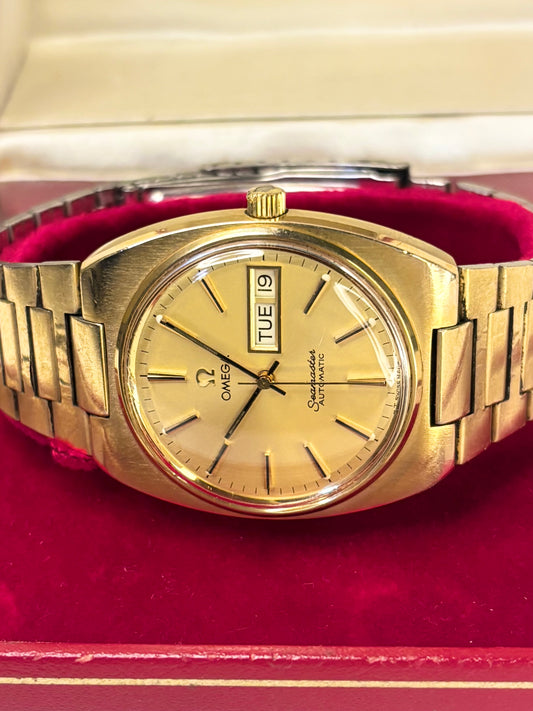
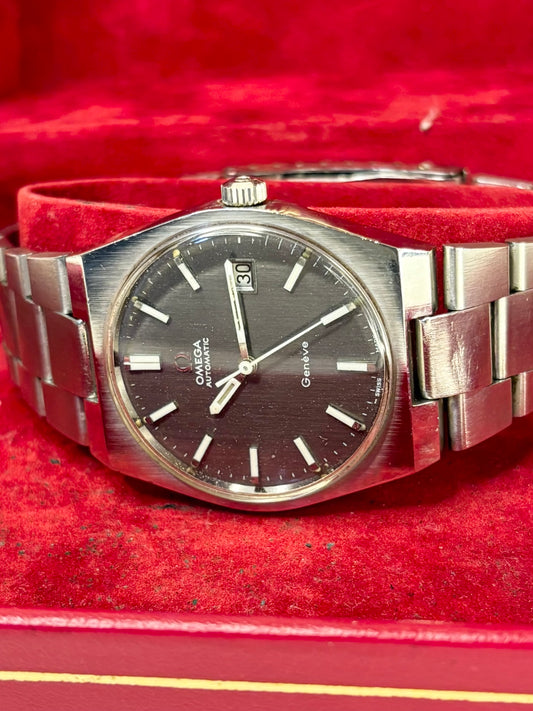
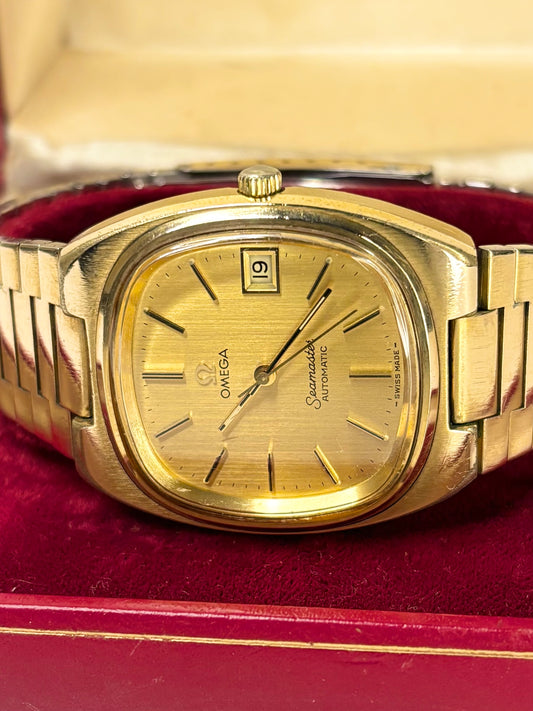
The OMEGA Genève - Vintage 1970's Automatic Day-Date Gold Dress Watch - Reference 166.0188 is a lovely example of a quality vintage timepiece from an era when features like antimagnetic protection were a genuine mark of good engineering - a genuine vintage Omega built to standards that have helped these watches endure so well.
Check out our full vintage watch collection today!
A Final Thought
So, if your vintage watch has Antimagnetic printed on its dial, you now know exactly what it means - the watch was engineered to resist the disruptive effects of magnetism, one of the most common and overlooked enemies of accurate timekeeping. Far from a cause for concern, it is a genuine mark of quality and thoughtful design - and a reminder that even today, if a mechanical watch starts running fast, magnetism is well worth ruling out.
At AR Collectables, every vintage timepiece in our collection is cleaned, tested, and honestly described. If you have any questions about the features of a specific piece, or are looking to buy a vintage watch with genuine quality and character, just drop us a message - we would love to help. 🤝
Check out our full vintage watch collection today!