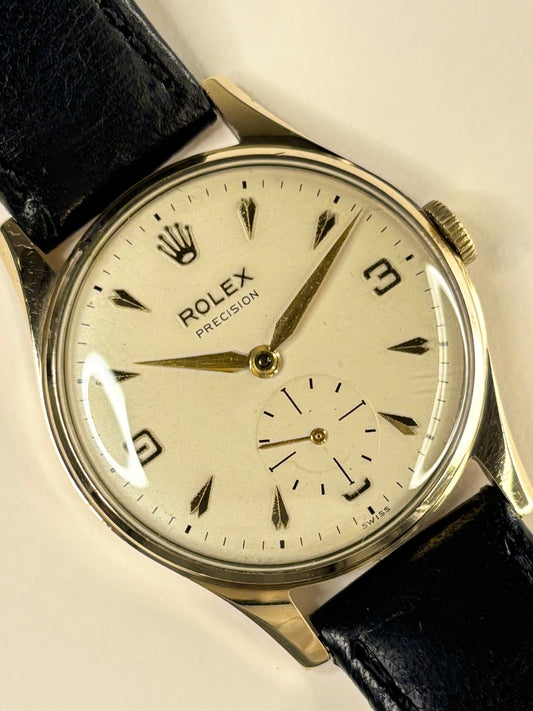

How Can I Measure the Accuracy of My Watch? A Simple Vintage Guide
If you own a vintage watch, you have probably wondered from time to time just how accurately it is keeping time. Is it gaining a little? Losing a little? Is it performing as it should? Measuring the accuracy of your watch is genuinely straightforward, requires nothing more than a reliable time reference and a little patience, and tells you a great deal about the health of your timepiece. Here is exactly how to do it.
Why Measure Your Watch's Accuracy?
Before we get to the how, it is worth knowing why this is a useful thing to do. Measuring your watch's accuracy tells you whether it is running within a healthy range, and it can alert you early to any problems. A watch that suddenly starts gaining or losing far more than usual may need attention - or may simply have become magnetised, as we discuss in our guides to vintage watch accuracy and what antimagnetic means.
Knowing your watch's daily rate also lets you use a simple trick to improve its timekeeping, which we will come to at the end. So it is well worth the small effort involved.
The Basic Method - Measuring Daily Rate
The accuracy of a mechanical watch is measured by its daily rate - how many seconds it gains or loses over a 24-hour period. Measuring this is simple.
First, you need an accurate time reference. The most reliable and accessible is the time on your mobile phone, which syncs automatically to an atomic clock and is accurate to the second. An online time source such as an atomic clock website works equally well.
Next, set your watch precisely to the reference time. If your watch has a hacking seconds mechanism, which stops the seconds hand when the crown is pulled out, as we explain in our guide to hacking seconds, this is easy - wait for the reference time to reach a particular point, set your watch to match exactly, and push the crown in on the second. If your watch does not hack, set it as precisely as you can.
Then, note the exact time you set it, and leave the watch to run - ideally wearing it as you normally would, since a watch's rate can differ between being worn and being left still.
Finally, after 24 hours, compare your watch against the reference time again, and note the difference!
Measuring Over Several Days for Accuracy

For a more reliable figure, it is worth measuring over several days rather than just one. A mechanical watch's rate can vary a little from day to day depending on how much you wear it, how active you are, and the positions the watch rests in overnight, so a single day's reading may not tell the whole story.
The simple approach is to set the watch precisely, then check it after, say, seven days, and divide the total difference by seven to get an average daily rate. If your watch is 70 seconds ahead after a week, that is an average of 10 seconds a day fast. This averaged figure gives a much truer picture of how your watch is really performing.
What is a Good Result?
Once you have your daily rate, how do you know if it is any good? As we explain in detail in our guide to how accurate a vintage watch should be, a well-maintained vintage watch running within around 30 seconds a day is doing perfectly well, and many good examples do considerably better. For genuinely old watches, over about 80 years of age, a wider margin of 60 to 120 seconds a day is entirely reasonable.
What matters most is consistency. A watch that reliably gains, say, 20 seconds a day is running healthily, even if it is not perfectly accurate - and as we will see, a consistent rate can even be used to your advantage.
A More Precise Method - the Timegrapher
For those who want to go further, there is a tool that watchmakers use to measure accuracy with great precision - the timegrapher. This device listens to the ticking of the movement and instantly displays the watch's rate, along with other measures of the movement's health such as its amplitude and beat error.
Timegraphers were once specialist professional equipment, but affordable versions are now available, and some enthusiasts enjoy using them to monitor their watches. A timegrapher gives an instant reading without waiting 24 hours, and it offers a genuine insight into the health of a movement - though for most owners, the simple 24-hour method is perfectly sufficient.
Using Your Watch's Rate to Your Advantage
Here is the lovely trick that knowing your daily rate makes possible. Because a mechanical watch runs at slightly different rates in different positions, you can use the position in which you rest your watch overnight to offset its daily rate.
If your watch tends to gain time, try resting it dial up overnight; if it tends to lose time, experiment with resting it crown down or in another position. By finding the right overnight resting position, you can offset the running rate during the day, and noticeably improve the watch's net accuracy over 24 hours. It is one of the most satisfying little skills of vintage watch ownership, and it is only possible once you have measured your watch's rate.
A Genuine Vintage Watch From Our Collection
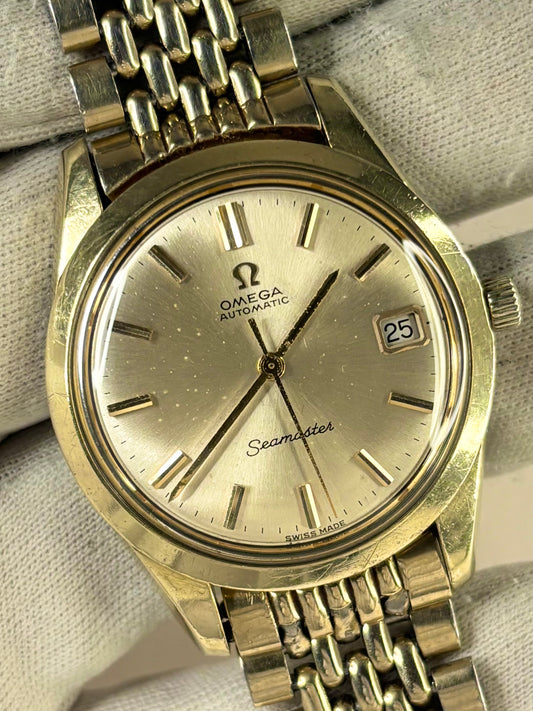
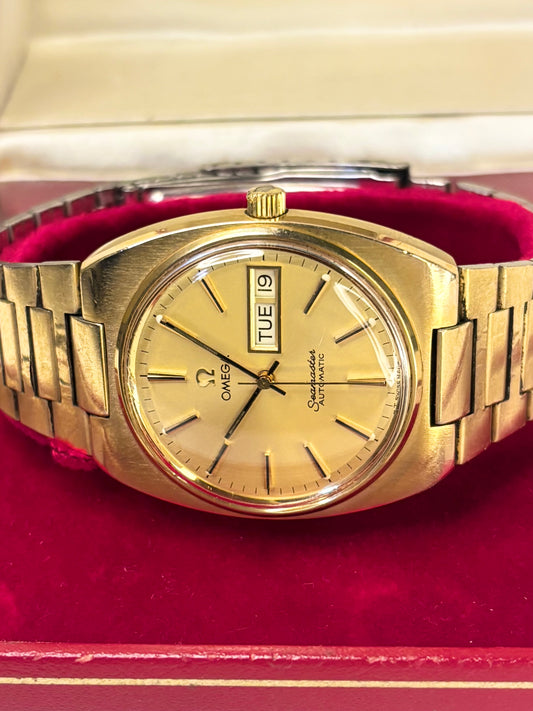
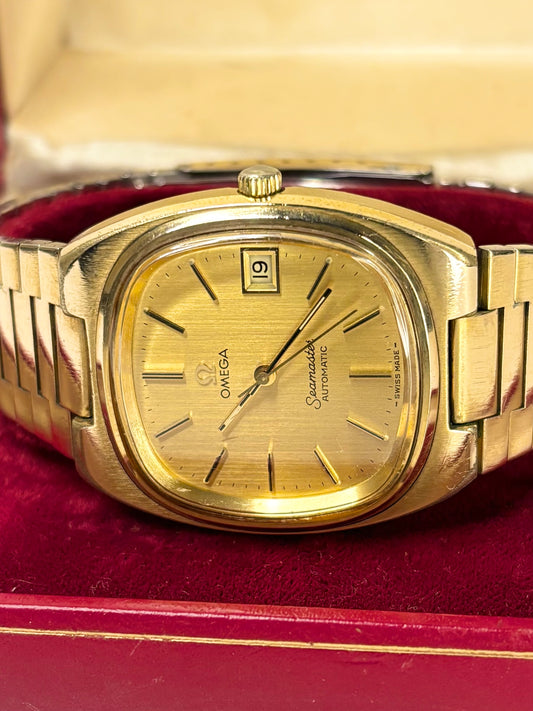
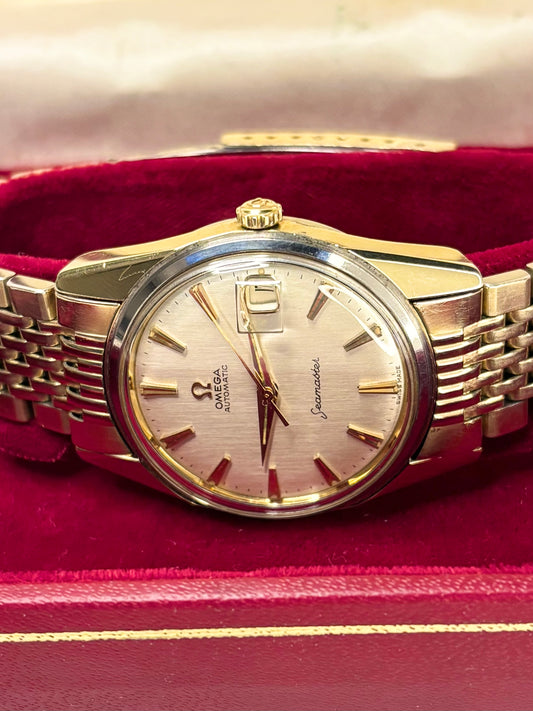
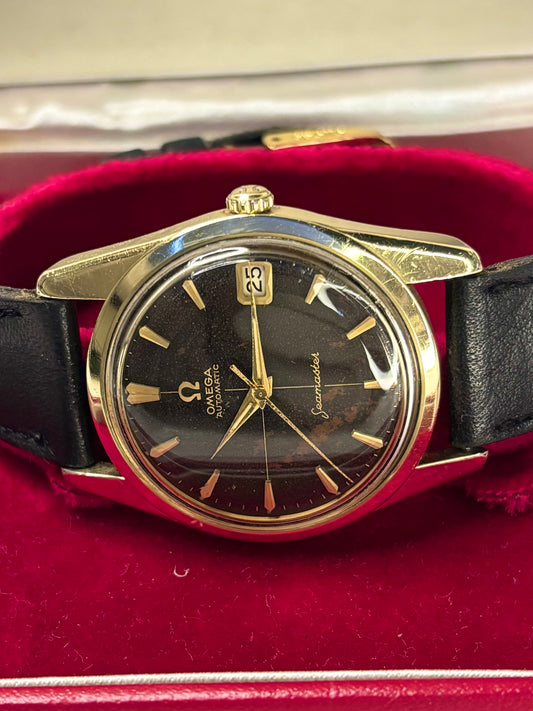
The OMEGA Seamaster - Vintage 1960's Men's Automatic Date Gold Dress Watch - Reference 166.002 is a lovely example of a quality vintage Omega automatic - exactly the kind of well-made vintage timepiece that rewards a little attention to its timekeeping, and every piece we sell is tested for timekeeping over a 24-hour period before listing.
Check out our full vintage watch collection today!
A Final Thought
Measuring the accuracy of your watch is a simple, satisfying, and genuinely useful thing to do. With nothing more than your phone and a little patience, you can find out exactly how your timepiece is performing, spot any problems early, and even use the result to improve its timekeeping. It is one of the small pleasures of living with a mechanical watch - a way of getting to know your timepiece a little better.
At AR Collectables, every vintage timepiece in our collection is cleaned, tested, and honestly described. If you have any questions about the timekeeping of your watch, or are looking to buy a vintage watch with a healthy, well-running movement, just drop us a message - we would love to help. 🤝
Check out our full vintage watch collection today!