
The Complete Guide to Vintage Watch Movement Makers - Ebauches Explained
Here is one of the most fascinating and least understood facts about vintage watches - the name on the dial is very often not the name of the company that made the movement inside. For much of the twentieth century, a great many Swiss watch brands did not manufacture their own movements at all, but bought them in from specialist movement makers. Understanding this opens up a whole hidden world - the world of the ébauche makers, the unsung specialists whose movements beat inside countless vintage watches. This guide explains it all.
What is an Ébauche?
To understand vintage movement makers, you first need to understand one key term - the ébauche. An ébauche is, in essence, a movement blank - an incomplete, unbranded movement, made by a specialist movement manufacturer and supplied to watch brands, who would then finish, adjust, and fit it into their own watches under their own name.
This was the heart of the Swiss watch industry for much of its history. A specialist firm would manufacture ébauches in large numbers, and sell them to watch brands - some of which had no movement-making capability of their own at all. The brand would then complete the movement, often adding its own finishing and markings, case it up, and sell it under its own name on the dial. So the watch was genuinely that brand's watch, but the movement at its heart was made by a specialist ébauche maker.
This is why, when you open up a vintage watch, the movement inside may carry a different name, or a maker's mark, quite distinct from the brand on the dial. Far from being a problem, this was completely normal and entirely legitimate - it was simply how a great deal of the industry worked.
Why the Industry Worked This Way

Understanding why this system existed helps it make sense. Manufacturing a watch movement from scratch is an enormously demanding and costly undertaking, requiring huge investment in machinery, expertise, and tooling. It simply was not practical, or necessary, for every watch brand to do this.
Instead, a group of specialist ébauche makers emerged, who became superb at manufacturing movements in large numbers, to a genuine standard of quality. Watch brands could then buy these movements in, focusing their own efforts on design, finishing, casing, and selling. This division of labour made good watches far more affordable and widespread than they could ever have been otherwise, and it allowed a huge variety of brands to flourish. The ébauche makers were, in a real sense, the hidden engine of the Swiss watch industry.
It is worth noting that some great names did manufacture their own movements in-house - true manufactures such as, in various respects, the most prestigious houses. But a very large proportion of vintage watches, particularly more accessible ones, are powered by bought-in ébauche movements - and these are genuinely good, reliable movements, well worth understanding and appreciating.
The Great Ébauche Makers
Over the decades, a number of specialist movement makers became genuinely renowned, their ébauches powering countless vintage watches. These are the names to know, and each deserves a closer look in its own right - the sections below introduce them, and we explore several in detail in their own dedicated guides.
A. Schild (AS)
A. Schild, usually abbreviated to AS, was one of the largest and most important ébauche makers of all. Its movements powered an enormous number of vintage watches across a huge range of brands, and an AS movement is one of the most commonly encountered of all vintage calibres. Known for reliable, well-made, workhorse movements, A. Schild is a name every vintage enthusiast comes to recognise.
ETA
ETA is perhaps the most famous ébauche maker of all, and the one name that remains hugely prominent in watchmaking to this day. ETA produced, and continues to produce, movements in vast numbers for a great many brands, and its calibres are renowned for their quality and reliability. A great many vintage watches are powered by ETA movements.
FHF (Fontainemelon)
FHF, standing for Fabrique d'Horlogerie de Fontainemelon, was one of the oldest and most significant ébauche makers, named for the village where it was based. FHF movements are very commonly found in vintage dress watches of all kinds, and the firm was a genuine mainstay of the industry.
Peseux
Peseux was renowned for its fine manual-wind movements, which are particularly prized by enthusiasts. Certain Peseux calibres became genuinely celebrated for their quality and elegance, and they are held in real affection by collectors of vintage manual-wind watches.
Felsa
Felsa was an important name particularly in the development of automatic movements, producing some genuinely significant early self-winding calibres. For anyone interested in the history of the automatic watch, as we explore in our guide to the history of automatic movements, Felsa is a name worth knowing.
Valjoux and Landeron
For chronographs - watches with a stopwatch function, as we explore in our guide to the chronograph - two names stand above the rest. Valjoux produced some of the most celebrated chronograph movements ever made, genuinely legendary among collectors, while Landeron was another hugely important maker of chronograph calibres. Between them, these two firms powered a great many vintage chronographs.
The Great Consolidation
One further part of the story is worth understanding, as it ties many of these names together. Over the course of the twentieth century, the Swiss ébauche industry gradually consolidated, with many of the individual makers being brought together under larger groupings. Several of the great names mentioned here eventually came together within the same industrial groups, as the Swiss industry reorganised to meet the challenges of the age - including, in time, the arrival of quartz, as we discuss in our guide to the history of quartz vintage watches.
This is why the relationships between these makers can seem tangled, and why movements from different names can share common features - many were, ultimately, part of the same wider story. The precise details of these mergers and groupings are a genuinely involved history in their own right, and one we will explore further in our dedicated guides to the individual makers.
Why This Matters for Collectors
Understanding ébauche makers is genuinely useful, and genuinely enriching, for the vintage watch lover. It helps you understand what is actually inside your watch - the movement may well be a quality ébauche from one of these great makers, which is something to appreciate, not to worry about. It helps with identifying and dating a watch, as the movement and its maker can be a valuable clue, as we touch on in our guide to vintage watch movements.
And it deepens the whole pleasure of the hobby. Once you know about the ébauche makers, opening up a vintage watch becomes a genuine voyage of discovery - a chance to find out which specialist firm made the movement at its heart, and to appreciate the hidden craftsmanship that so often lies behind a modest dial. Far from diminishing a watch, a quality bought-in movement is part of its genuine character and history.
A Genuine Vintage Watch From Our Collection
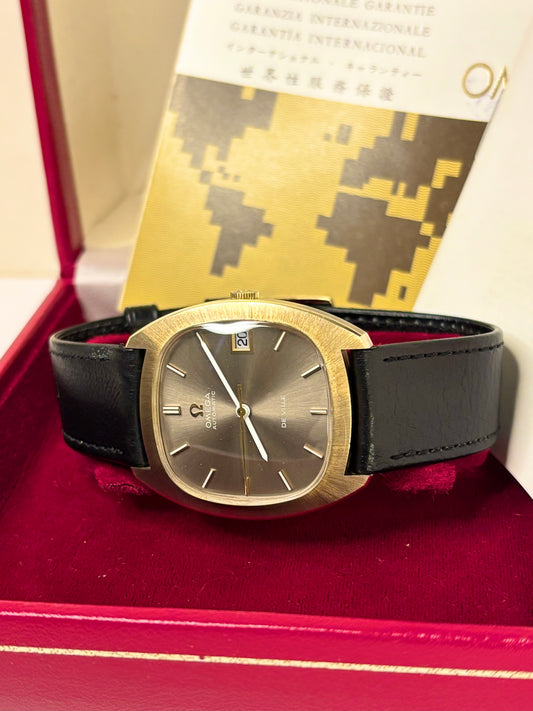
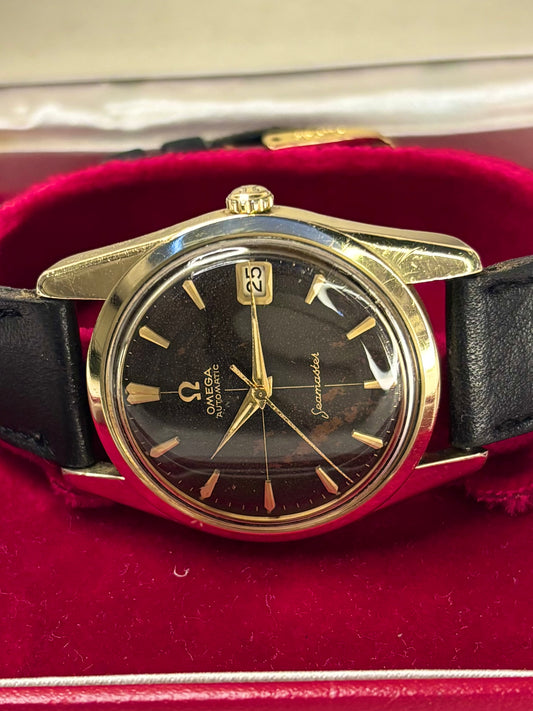
The Rotary Box and Papers Gold Dress Watch is a lovely example of exactly this kind of watch - a genuine Swiss timepiece from a respected brand, of the sort that so often houses a quality bought-in movement from one of the great ébauche makers, presented complete with its box and papers. It is a wonderful illustration of the hidden craftsmanship that makes vintage Rotary watches so rewarding to understand.
Check out our full vintage watch collection here!
A Final Thought
The world of the ébauche makers is one of the most fascinating and least understood corners of vintage watchmaking. Once you understand that the name on the dial is often not the name that made the movement, a whole hidden layer of the hobby opens up - the unsung specialist firms, from A. Schild and ETA to FHF, Peseux, Felsa, Valjoux, and Landeron, whose movements beat inside countless vintage watches. Far from a disappointment, this is part of the genuine richness and history of vintage watches, and understanding it makes owning them all the more rewarding.
At AR Collectables, we love the hidden history and craftsmanship inside every vintage watch, and each piece in our collection is handpicked, cleaned, and tested. If you would like to know more about the movement inside a particular piece, or are looking to buy a genuine vintage watch, just drop me a message - we would love to help. 🤝