
Why Shouldn't I Change the Date on My Watch at Midnight? A Vintage Guide
It is one of the most important pieces of vintage watch care advice, yet one that many owners have never heard - never change the date on your watch late at night, or around midnight. Doing so risks damaging the movement, and it is a surprisingly common cause of avoidable harm to vintage watches. But why is this, and when is it actually safe to change the date? Here is everything you need to know.
The Short Answer - the Date Mechanism is Engaged
The reason is simple, and once you understand it, you will never forget it. In a watch with a date function, the movement automatically changes the date once every 24 hours, at midnight. To do this, the mechanism begins to engage in the hours approaching midnight, gradually shifting into position to make the change, and then disengages again in the hours afterwards.
During this period - when the date-change mechanism is engaged and in motion - the small gears and levers involved are meshed together and under tension. If you manually change the date at this moment, using the crown, you are forcing those already-engaged components against one another, and this can cause wear, damage, or even breakage of the delicate parts involved. It is one of the most common ways a date mechanism comes to grief.
What is the 'Danger Zone'?
Watch enthusiasts often refer to a danger zone - the period around midnight during which you should not manually change the date. While the exact window varies from movement to movement, a good, cautious rule of thumb is to avoid changing the date between around 9pm and 3am.
Outside of this window - during the day, or in the early-to-mid evening well before midnight - the date-change mechanism is fully disengaged and at rest, and it is perfectly safe to adjust the date. The problem arises only when the mechanism is engaged, in those hours surrounding midnight.
How to Safely Change the Date

Happily, avoiding the problem is very easy. If you need to set the date on your vintage watch, the safest approach is simple.
First, if in any doubt, move the hands well away from the midnight danger zone before adjusting the date. You can do this by setting the time to somewhere safe, such as around six o'clock, before changing the date. With the hands safely away from midnight, you can then adjust the date freely, knowing the mechanism is disengaged.
Once the date is set, you can then set the correct time - and here is one further point to bear in mind. When advancing the hands to set the time, watch which midnight the date rolls over on, so you know whether you are setting the watch to morning or afternoon. If the date changes as the hands pass twelve, you are at midnight; if it does not, you are at midday. This ensures your watch shows the correct date through the day.
Why This Matters Especially for Vintage Watches
This advice applies to all mechanical watches with a date function, but it matters especially for vintage timepieces. The date mechanisms in vintage watches are decades old, and their components may already have experienced years of wear. Forcing an engaged date mechanism on a vintage watch is asking an old, delicate part to take a strain it was never meant to bear - and a broken date mechanism can mean an expensive repair, as we discuss in our guide to vintage watch servicing costs.
Treating the date function gently is therefore an important part of caring for a vintage watch, as we explore in our complete guide to caring for a vintage watch. It costs nothing and takes only a moment, and it protects your watch from one of the most common causes of avoidable damage.
A Genuine Vintage Date Watch From Our Collection
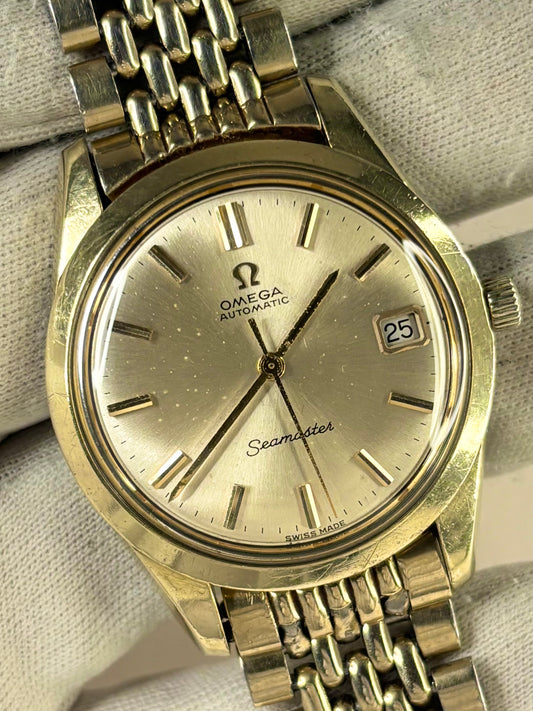
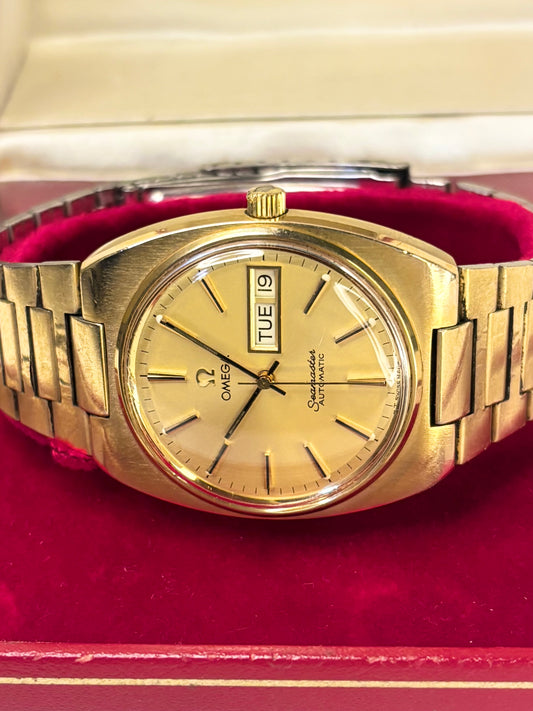
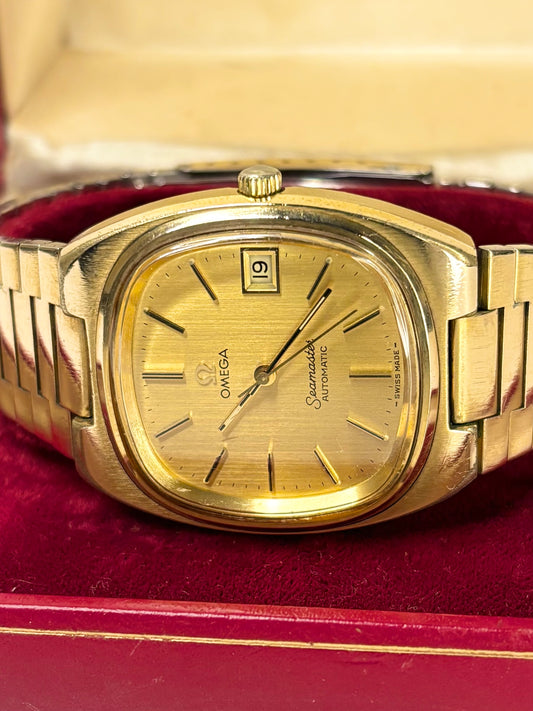
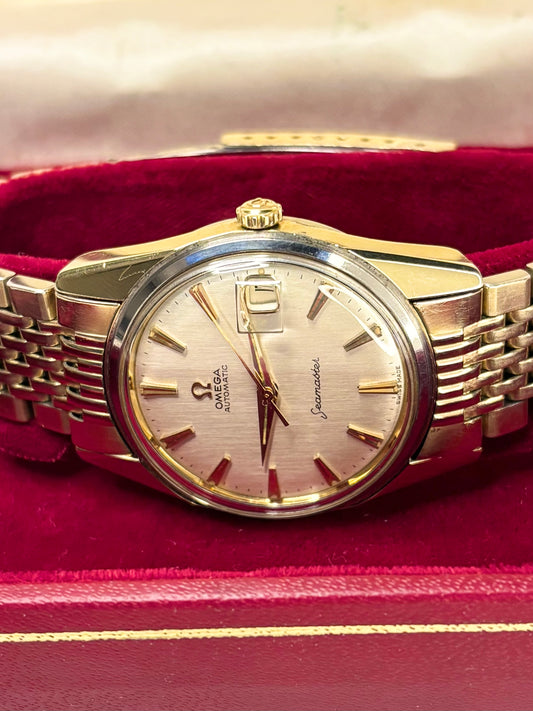
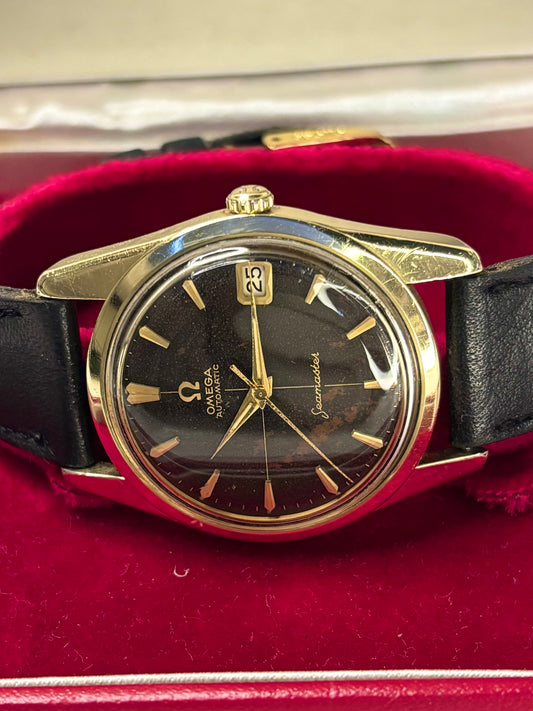
The OMEGA Seamaster - Vintage 1960's Men's Automatic Date Gold Dress Watch - Reference 166.002 is a lovely example of a genuine vintage Omega with a date function - exactly the kind of watch that will give a lifetime of faithful service when its date mechanism is treated with a little care.
Check out our full vintage watch collection today!
A Final Thought
So, if your vintage watch has a date function, remember this simple rule - never change the date around midnight, and if in doubt, move the hands to a safe time such as six o'clock before adjusting it. It is one of the easiest and most important habits of good vintage watch care, protecting the delicate date mechanism from one of the most common causes of avoidable damage. A moment's care now can save an expensive repair later - and keep your vintage timepiece running happily for years to come.
At AR Collectables, every vintage timepiece in our collection is handpicked, cleaned, and tested. If you have any questions about caring for your watch, or are looking to buy a vintage watch to treasure, just drop us a message - we would love to help. 🤝
Check out our full vintage watch collection today!