
What is a Bumper Watch? And How Does it Work?
If you have ever picked up a vintage watch from the late 1940s or 1950s, given it a gentle shake, and heard a soft, rhythmic thudding sound from inside the case - you have almost certainly been holding a bumper automatic. It is one of the most distinctive and endearing sounds in the entire world of vintage watches, and once you know what causes it, it becomes one of the first things you listen for when handling a timepiece from this era.
But what exactly is a bumper automatic, how does the mechanism work, and why do collectors love them so much? Here is everything you need to know.
A Quick Bit of Context - the Automatic Movement

To understand what makes a bumper automatic special, it helps to first understand what an automatic movement is trying to achieve.
An automatic watch - sometimes called a self-winding watch - winds its own mainspring through the natural movement of the wearer's wrist, eliminating the need for daily manual winding. It does this via a weighted rotor that responds to the motion of the wrist, transferring that energy into the mainspring and keeping the watch wound throughout the day.
The question that occupied watchmakers through the 1930s, 1940s, and 1950s was how best to design that rotor - and the bumper automatic was one of the most elegant and characterful answers they found.
How a Bumper Automatic Actually Works

In a modern automatic watch, the rotor is a semicircular weighted mass that spins freely in a complete 360-degree circle in either direction. Every movement of the wrist sends it spinning, and that rotation is converted into winding energy via a clever series of gears and ratchets.
A bumper automatic works on a fundamentally different principle. Rather than a rotor that spins freely all the way around, the bumper mechanism uses a weighted sector - think of it as a roughly quarter-to-third circle of metal - that swings back and forth through a limited arc of typically around 120 degrees. At either end of that arc, the sector strikes a small spring buffer - the bumper - which absorbs the impact and sends the sector swinging back in the opposite direction.
Each swing of the sector in either direction winds the mainspring, and the whole system is driven entirely by the motion of the wearer's wrist. Walk across a room, gesture with your hand, or simply give the watch a deliberate shake - and the sector swings back and forth energetically, winding the mainspring with each pass.
The bumpers themselves - those small spring buffers that the sector strikes at the end of each swing - are what give this movement type its name. And they are also responsible for that immediately recognisable sound.
The Sound - Why Bumper Automatics Thud
This is the detail that vintage watch enthusiasts tend to remember most vividly about their first encounter with a bumper automatic - the sound.
Hold a bumper automatic in your hand and give it a gentle shake. You will hear, from somewhere inside the case, a soft but clearly audible thud - followed immediately by another thud as the sector swings back and hits the opposite bumper. Shake it more energetically and the sound becomes a rapid, rhythmic knocking - a gentle percussion that has absolutely no equivalent in any other type of watch movement.
It sounds, to the uninitiated, vaguely like something might be loose inside the watch. The first time many people hear it, their instinct is to wonder if something has gone wrong. In fact, the sound is entirely correct and entirely charming - it is the bumper automatic doing exactly what it was designed to do, and it is one of the most distinctive and loveable characteristics a vintage timepiece can have.
Once you have heard a bumper automatic, you will recognise the sound immediately for the rest of your collecting life.
Browse our full vintage watch collection today!
Which Watches Have Bumper Automatic Movements?

Bumper automatic movements were produced by a number of Swiss manufacturers through the late 1940s and 1950s, before being largely superseded by the more efficient full-rotor automatic through the late 1950s and early 1960s.
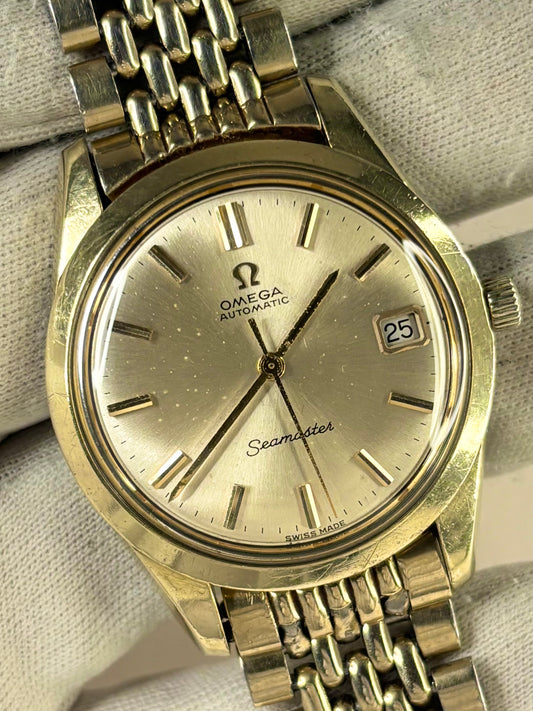
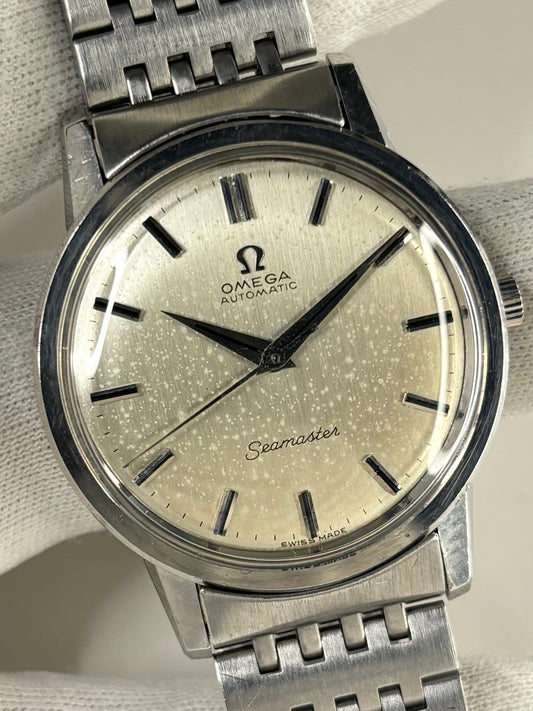
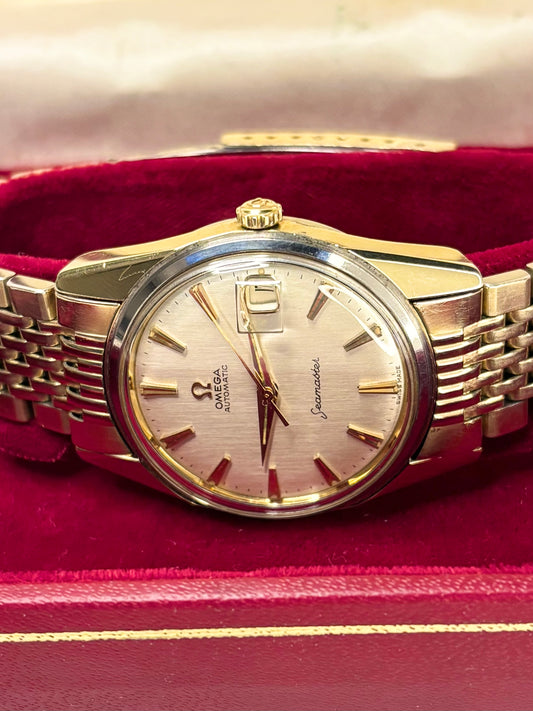
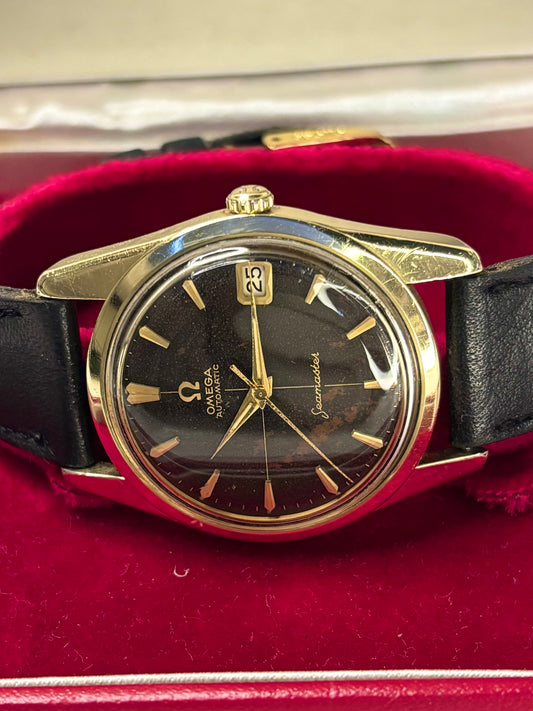
Omega produced some of the finest and most celebrated bumper automatic calibres of the era. The calibre 342 and 351 - discussed in more detail in our guide to vintage Omega movements - are the most widely encountered Omega bumper calibres, and they powered many of the most beautiful vintage Omega Seamaster models of the early-to-mid 1950s. Finding a vintage Omega Seamaster from this period with its original bumper calibre running correctly is always a real pleasure - the combination of elegant 1950s case design and that characterful, audible movement is simply wonderful.
Other Swiss manufacturers including Tissot, Longines, and various others also produced bumper automatic calibres during this period, and the movement type appears across a broad range of vintage watches from the era. It is one of the defining mechanical characteristics of the late 1940s and 1950s vintage watch, and a strong indicator that a piece dates from this specific and very appealing window of watchmaking history.
Why Collectors Love Them
The bumper automatic occupies a very particular and very warm place in the hearts of vintage watch collectors, and it is easy to understand why.
There is the sound, first of all - that gentle, rhythmic thud that no other movement produces and that never fails to draw a smile from anyone who hears it for the first time. There is the history - these are movements from a very specific and very beautiful era of watchmaking, the post-war years when Swiss manufacturers were producing timepieces of genuine quality and character for a world that had just rediscovered the pleasure of normal life. And there is the mechanical ingenuity - the bumper automatic is a clever, elegant solution to the challenge of self-winding, and understanding how it works makes it all the more satisfying to own.
A vintage Omega Seamaster from the early 1950s with a bumper calibre in good working order is, in this writer's opinion, one of the most characterful and enjoyable vintage watches you can own. It rewards attention, it rewards handling, and every time you pick it up and hear that soft, distinctive knock from inside the case, it reminds you that you are wearing something with a genuine story behind it.
At AR Collectables, we have a genuine affection for bumper automatic watches and are always happy to discuss the specific movement inside any piece in our collection. If you have any questions, just drop us a message. 🤝
Browse our full vintage watch collection today!