
The History of Quartz Watches - From Industry Crisis to Collectable Vintage Watch
If the story of the manual-wind movement spans five centuries and the automatic movement spans two and a half, the quartz watch arrived and rewrote the entire industry in the space of about a decade. No other development in the history of watchmaking moved faster, hit harder, or caused more disruption - and no other chapter in that history is more fascinating to look back on from where we stand today.
How Quartz Timekeeping Actually Works
Before getting into the history, it is worth briefly understanding what makes a quartz movement different from its mechanical counterparts.
Inside a quartz watch sits a tiny sliver of quartz crystal. When an electrical current from a small battery is passed through it, the crystal vibrates at an extraordinarily consistent frequency - 32,768 times per second, to be precise. Those vibrations are counted by a circuit and divided down into one pulse per second, which drives a small stepping motor that moves the hands. The consistency of the crystal's vibration is what makes quartz so accurate - a well-regulated quartz watch loses or gains only a few seconds per month, compared to several seconds per day for even a very good mechanical timekeeper.
It is a brilliant piece of engineering. And in 1969, it arrived on the wrist of the world for the first time.
Seiko, the Beta 21, and the Shot Heard Around the Watch Industry
The race to produce the first commercial quartz wristwatch was one of the great technological competitions of the 1960s, with Japanese manufacturer Seiko and a Swiss consortium known as the Centre Electronique Horloger both pushing hard towards the finish line.
Seiko got there first. The Seiko Astron, released on Christmas Day 1969, was the first quartz wristwatch available to the public. It was accurate to within five seconds per day - roughly fifty times better than a comparable mechanical watch - and it retailed in Japan for a price equivalent to a small car. At that point, quartz was very much a luxury.
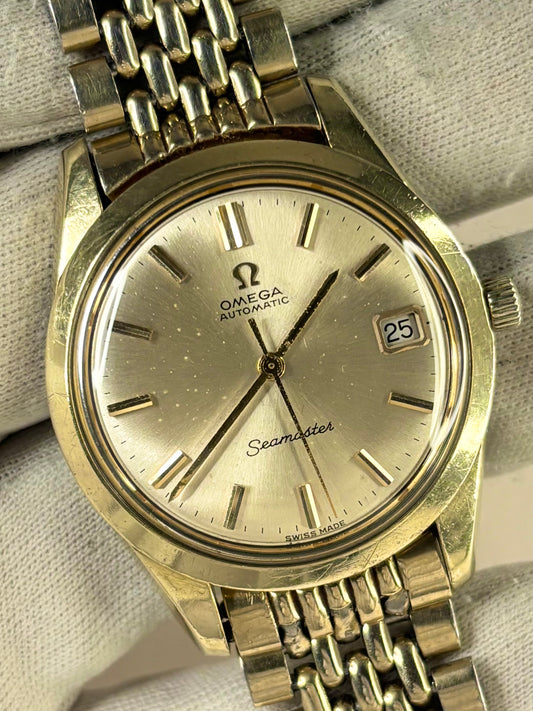
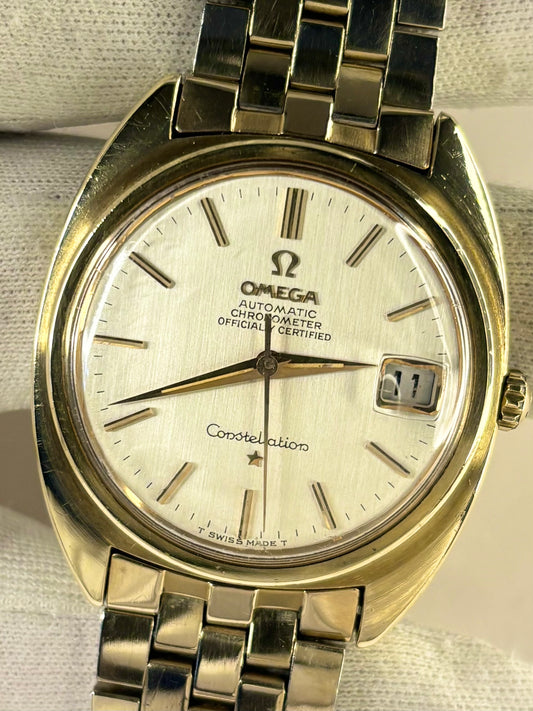
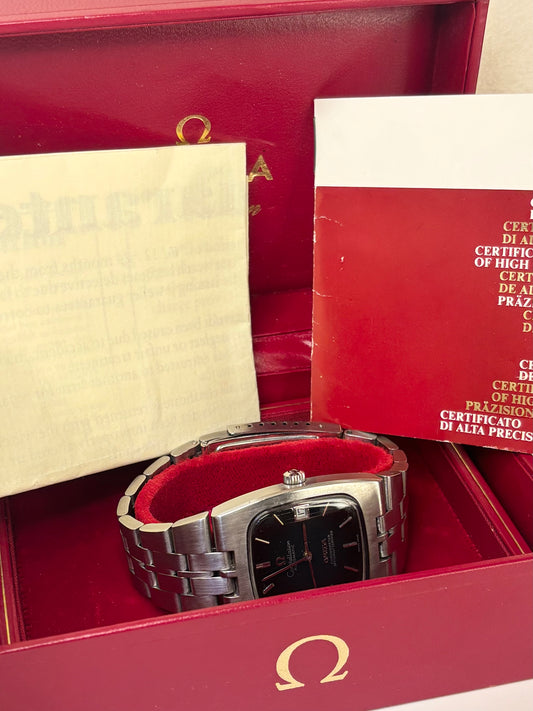
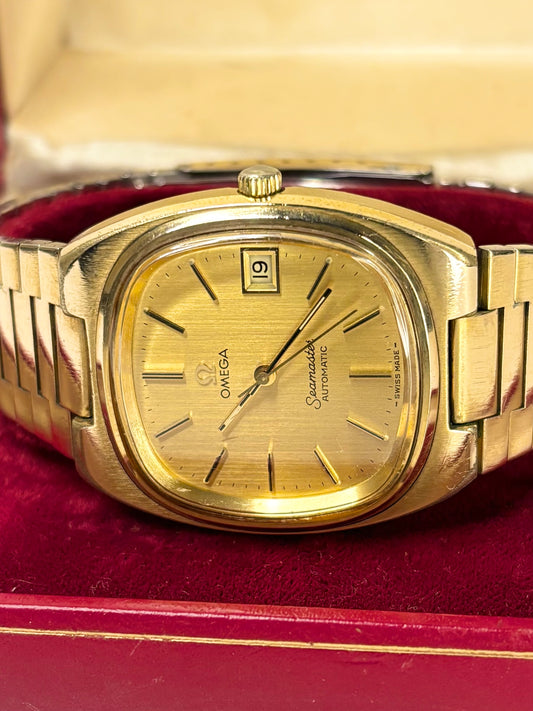
The Swiss response arrived shortly after in the form of the Beta 21 - a collaborative quartz calibre developed by the Centre Electronique Horloger and used by a number of prestigious Swiss manufacturers, Omega among them. The vintage Omega Electroquartz, released in 1970 and housing the Beta 21 calibre, was one of the first Swiss quartz watches available to the public and is today a genuinely fascinating and collectable vintage watch - a direct piece of the moment the Swiss industry first grappled with the quartz revolution.
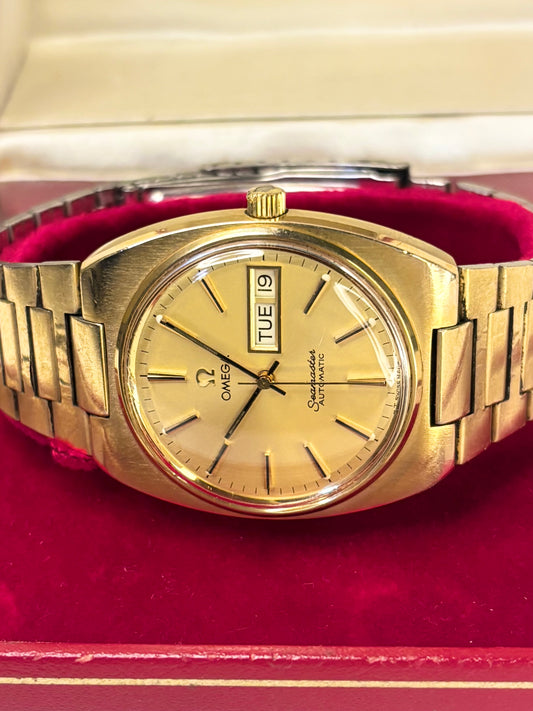
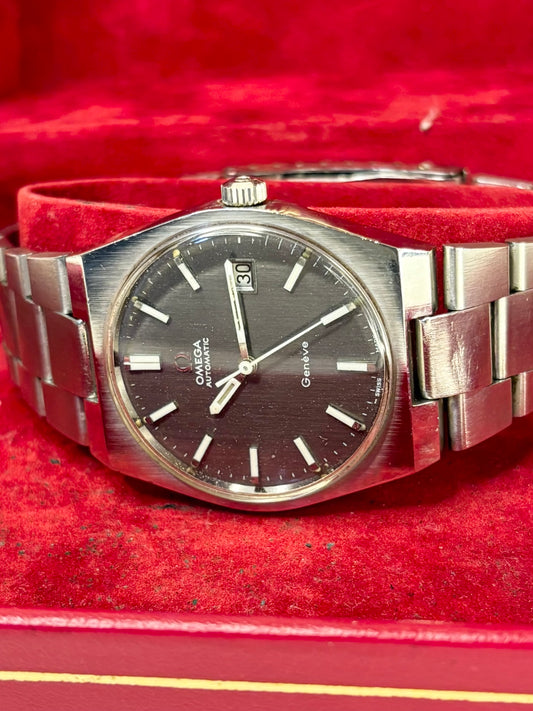
Browse our vintage Omega collection today!
The Quartz Crisis

What began as a high-end novelty became, within a few years, an existential threat.
As the cost of producing quartz movements fell rapidly through the early 1970s, affordable quartz watches flooded the market from Japanese manufacturers. The accuracy advantage over mechanical watches was undeniable, the price advantage even more so. Swiss watch exports collapsed. Historic manufacturers that had been operating for generations went under or were absorbed into larger groups. Employment in the Swiss watch industry fell from around 90,000 people in the late 1960s to fewer than 30,000 by the mid-1980s. The damage was severe and lasting.
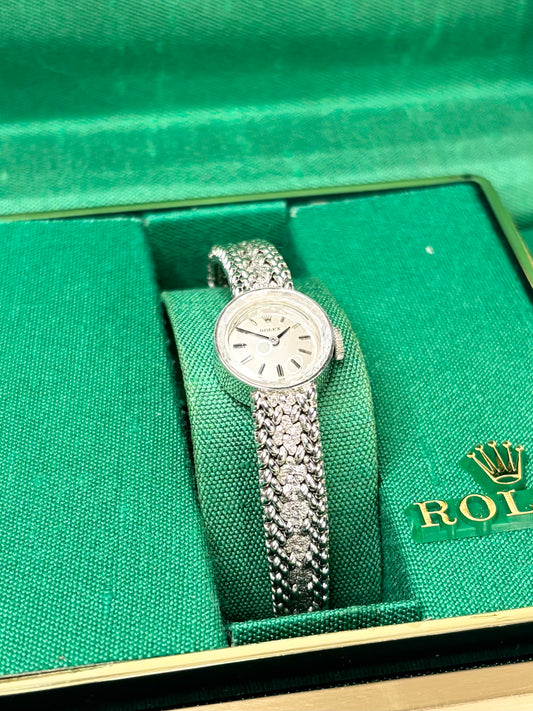
Rolex and Omega - the two names most synonymous with Swiss watchmaking in the public mind - both survived, but neither emerged unchanged. Both developed their own quartz calibres during this period, reasoning that if quartz was the future, they needed to be part of it. The vintage Rolex 5100, housing Rolex's own Beta 21-based quartz movement and produced in small numbers through the early 1970s, is today one of the rarest and most intriguing vintage Rolex pieces in existence - a reminder that even Rolex briefly considered that mechanical might be finished.
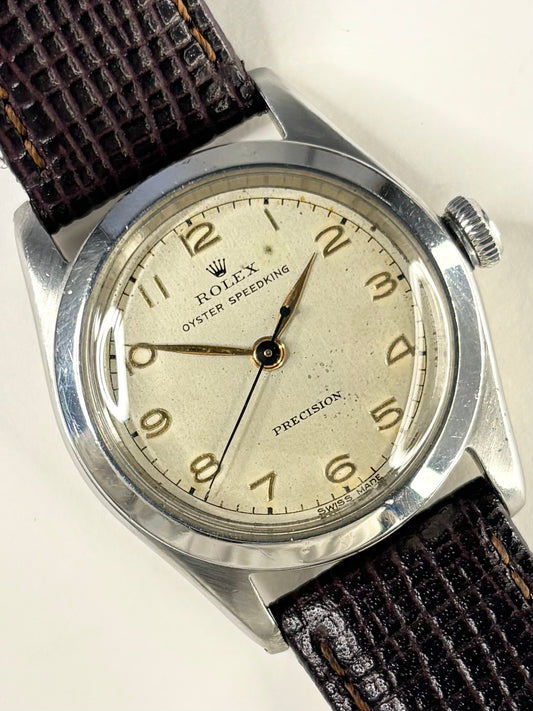
Browse our vintage Rolex collection today!
What Saved the Mechanical Watch

The mechanical watch was ultimately saved by a combination of sentiment, craft appreciation, and one very clever piece of Swiss branding.
Nicolas Hayek, the businessman who engineered the merger that created the Swatch Group in the early 1980s, understood that the Swiss industry needed to fight quartz with quartz - but on its own terms. The Swatch, launched in 1983, was a colourful, affordable, Swiss-made quartz watch that turned a timepiece into a fashion accessory and sold in extraordinary volumes. It stabilised the Swiss industry financially and bought time for the mechanical watch to find its footing again.
That footing came from a growing recognition, through the 1980s and into the 1990s, that a mechanical watch offered something a quartz watch simply could not - craft, history, and a connection to centuries of accumulated human ingenuity. Collectors and enthusiasts who had never stopped appreciating mechanical watches began to be joined by a new generation of buyers, and the market for high-quality mechanical timepieces began a recovery that has continued ever since.
Why Quartz Vintage Watches Are Now Collectable
Here is something that surprises many people new to the vintage watch world - early quartz watches are themselves now genuinely collectable.
The first generation of quartz timepieces, produced through the 1970s, occupy a unique and fascinating position in watchmaking history. They were made with the same care, quality of materials, and attention to design that their mechanical predecessors received - because at the time, quartz was positioned as the premium option! Early vintage Omega and vintage Rolex quartz pieces in particular are built to a standard that later, mass-market quartz watches never matched.
There is also the historical dimension. A vintage watch from this era is a physical artefact from one of the most turbulent and dramatic periods in the history of the craft - and that story gives it a significance and interest that goes well beyond its timekeeping function.
At AR Collectables, we appreciate vintage watches from every chapter of the story - mechanical or quartz, as discussed in our complete guide to vintage watch movements. If any piece in our collection catches your eye, just drop us a message. We are always happy to chat. 🤝
Browse our full vintage watch collection today!