
Should I Polish My Vintage Watch? What Every Vintage Owner Should Know
It is one of the most common questions a vintage watch owner asks - should I polish my watch to make it look its best? The instinct is understandable, as a gleaming, freshly polished case can look wonderful. But when it comes to vintage watches, polishing is a subject that deserves real caution, and the honest answer may surprise you. Here is everything you need to know before you polish a vintage watch.
The Short Answer - Usually, No
Let us start with the honest answer. For most vintage watches, the wise course is to polish sparingly, if at all - and certainly not to have a watch heavily or repeatedly polished. While a polish can make a case gleam, over-polishing is one of the most common ways a vintage watch is unintentionally diminished, both in character and in value.
This runs counter to instinct, which says that making something look shiny and new must be an improvement. But with vintage watches, originality and honest character are prized far above artificial shine, and understanding why is genuinely important.
Why Over-Polishing Harms a Vintage Watch
The reason comes down to what polishing actually does. Polishing a metal watch case does not simply clean it - it removes a fine layer of metal from the surface, which is how scratches are buffed away. Do this once, gently, and the effect is minor. But do it repeatedly, or aggressively, and the consequences are real and permanent.
Over-polishing wears away the crisp, original lines of a case. The sharp edges, defined facets, and clean bevels that a watch left the factory with gradually become soft, rounded, and blurred, as we discuss in our guide to what lugs are, where over-polished, thinned lugs are a common sign of a watch that has been buffed too many times. It can also thin the case over time, wear away original finishing such as brushed or satin surfaces, and soften crisp hallmarks or engravings. Once this metal is gone, it cannot be put back - the damage is permanent.
Originality is Everything

Here is the crucial point that ties it all together. In vintage watch collecting, originality is prized above almost everything else, as we discuss throughout our guides, including our guide to spotting a fake vintage watch. A vintage watch that retains its original, crisp, unpolished case - even with a few honest marks of age - is far more desirable, and far more valuable, than one that has been polished into soft, rounded submission.
Collectors speak of a watch's case being sharp or full - meaning it retains its original shape, thickness, and defined edges. This is exactly what over-polishing destroys. A watch with a sharp, original case tells an honest story and retains its genuine character, while an over-polished one has lost something that can never be recovered. This is why experienced collectors are often actively wary of a case that looks too shiny and perfect - it can be a sign of exactly the over-polishing to avoid.
Honest Wear vs Damage
It helps to distinguish between honest wear and actual damage. A vintage watch is, by definition, an object with a history, and a few light marks, faint scratches, and the gentle patina of age are entirely normal - part of the genuine character that makes vintage watches so appealing, as we discuss in our guide to patina on a vintage watch.
Many collectors genuinely prefer this honest wear to an artificially perfect finish, seeing it as part of the watch's story. So before reaching for the polish, it is worth asking whether the marks you want to remove are really a problem at all, or simply the honest character of a watch that has lived a life. Very often, they are the latter - and best left alone.
What You Can Safely Do
The good news is that keeping a vintage watch looking its best does not require polishing the case at all. Gentle regular cleaning with a soft cloth, as we discuss in our guide to cleaning a vintage watch, will keep a watch looking lovely without removing any metal. And if it is the crystal rather than the case that looks tired, remember that scratches on an acrylic crystal can often be polished out safely - since this polishes the crystal, not the precious original case - as we explain in our guide to removing scratches from an acrylic crystal. Very often, a clean and a crystal polish are all a vintage watch needs to look wonderful.
A Genuine Vintage Watch From Our Collection
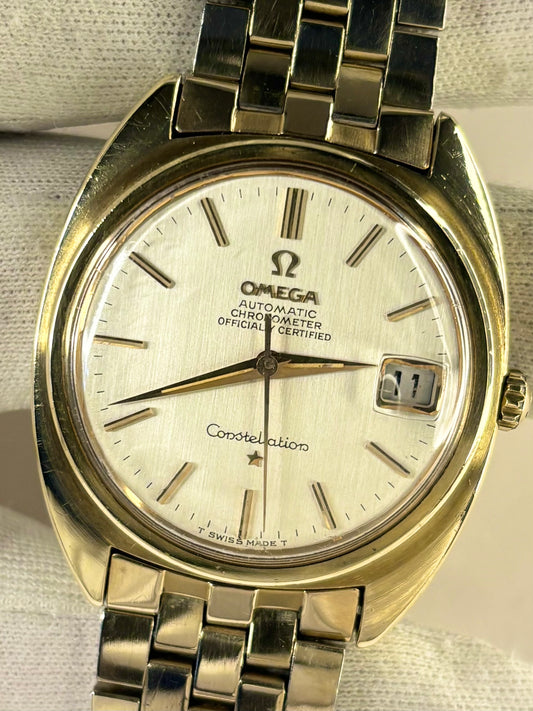
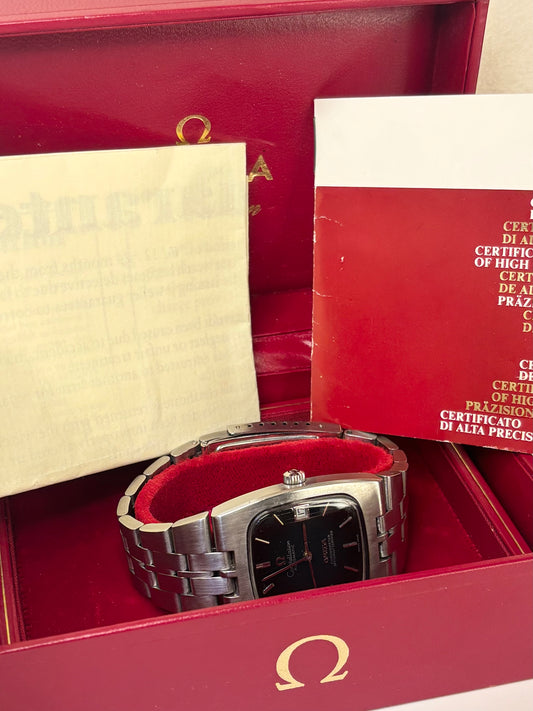
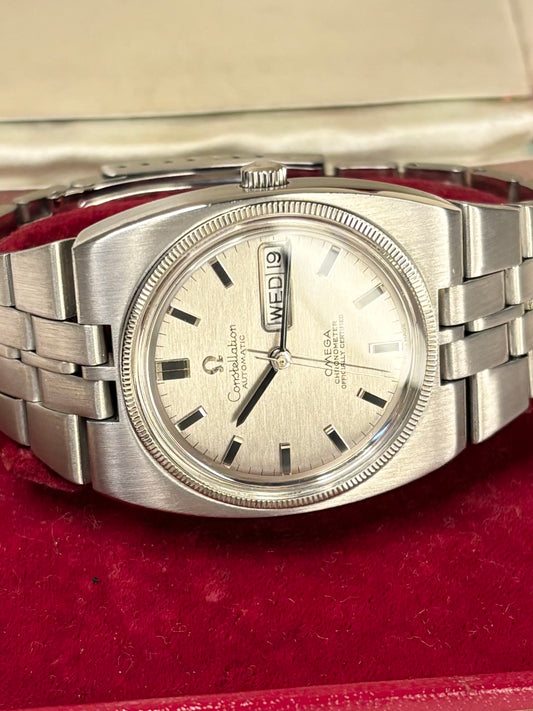
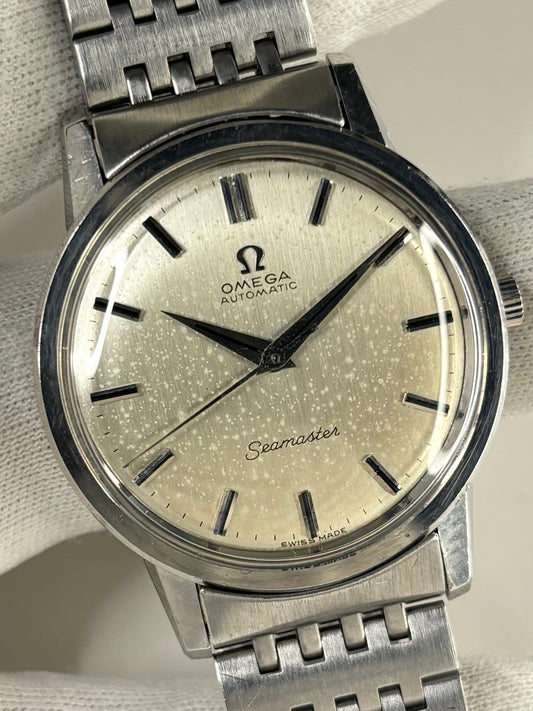
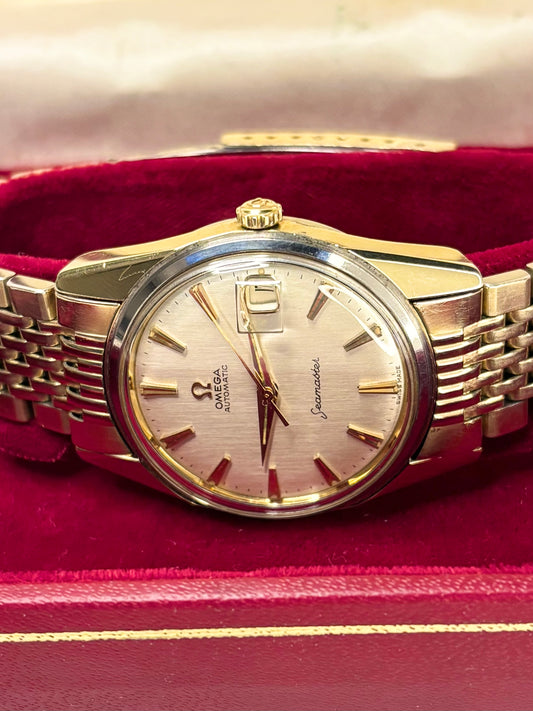
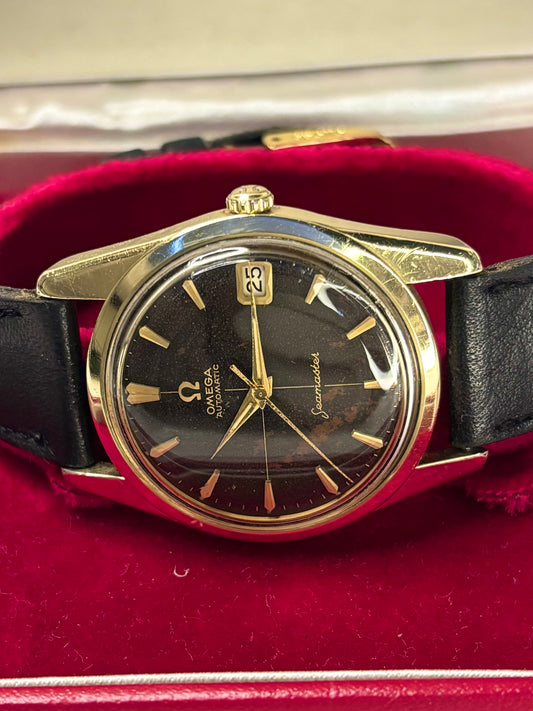
The OMEGA Constellation - Vintage 1960's Men's Automatic Date Silver Watch - Reference 168.018 is a lovely example of a quality vintage Omega with a beautifully preserved case - exactly the kind of crisp, original character that a collector looks for, and that careful ownership keeps intact.
Check out our full vintage watch collection today!
A Final Thought
So, should you polish your vintage watch? In most cases, the wise answer is to resist the urge - or at most to have a watch polished only very lightly, very rarely, and by a skilled professional. Over-polishing permanently wears away the crisp original lines and honest character that make a vintage watch so special, and it cannot be undone. Far better to embrace the honest wear of a watch that has lived a life, keep it clean and cared for, and preserve the genuine originality that collectors prize above all. A vintage watch is not meant to look brand new - it is meant to look genuine.
At AR Collectables, every vintage timepiece in our collection is handpicked, cleaned, and tested, with its original character carefully preserved. If you have any questions about caring for your watch, or are looking to buy a vintage watch with genuine, honest character, just drop me a message - we would love to help. 🤝