
How to Tell if a Vintage Watch is From the 1960's - 5 Features Every Collector Should Know
If the 1950's were about elegance and refinement, the 1960's were about confidence. The whole world was changing at pace - music, fashion, culture - and the watch industry was right there alongside it, producing some of the most iconic timepieces ever made. Brands like Omega and Rolex were firing on all cylinders, and the designs that came out of this decade are among the most collectable vintage watches on the planet today, most notably the sunburst dial.
But how do you actually tell if a vintage timepiece is from the 1960's? Here are five features that give it away every time!
1. Growing Case Sizes and Bolder Proportions
One of the clearest shifts between a 1950s and a 1960s vintage watch is the case size. Through the 1960s, cases began to grow - not dramatically, but noticeably. Where a 1950s dress watch might sit at 33mm or 34mm, a 1960s timepiece typically lands somewhere between 35mm and 38mm.
It reflects the mood of the decade perfectly. There was a growing confidence in design across the board, and watches were no exception. Cases became a little more assertive, lugs a little more pronounced, and the overall presence on the wrist a little more deliberate.
This is one of those features that is easy to overlook on its own, but when combined with the other details on this list, it becomes a really reliable part of the picture.
Browse our current selection of 1960s vintage timepieces today!
2. The Central Sweeping Seconds Hand

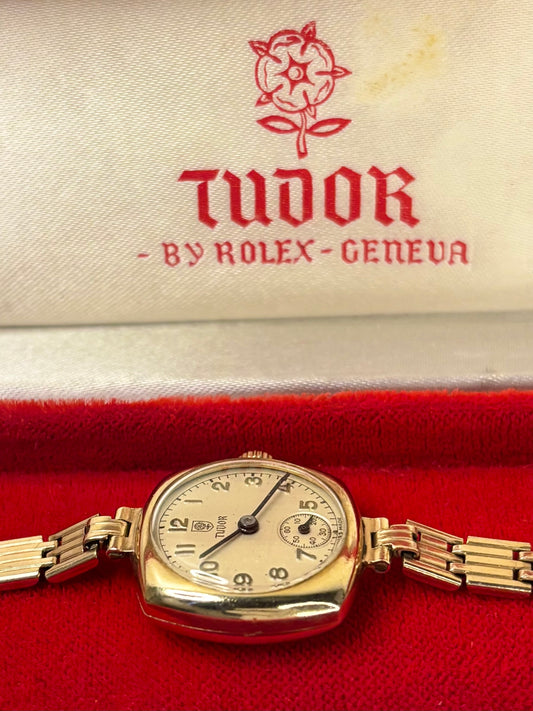
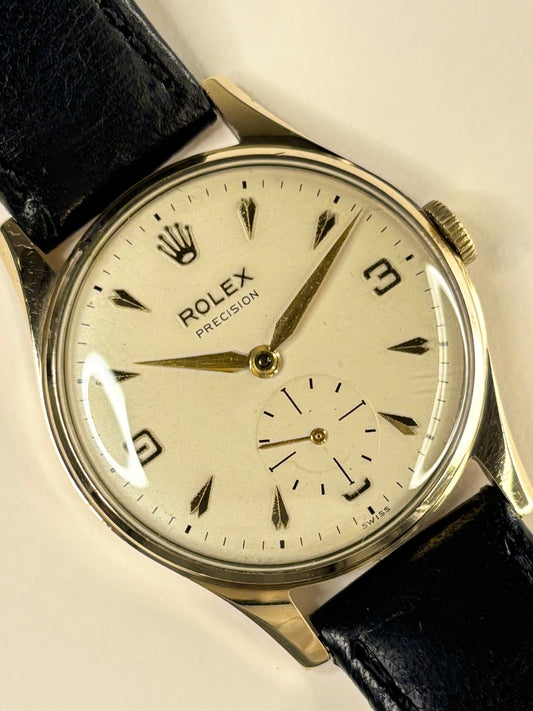
Cast your mind back to the previous post on 1950's vintage watches, and you will remember that the subsidiary seconds dial - that small, separate seconds counter sitting at 6 o'clock - was one of the defining features of the decade.
By the 1960s, that was largely a thing of the past.
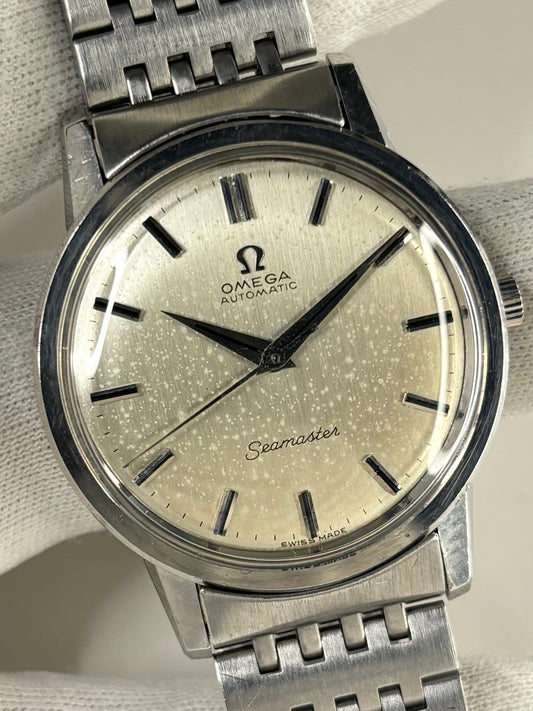
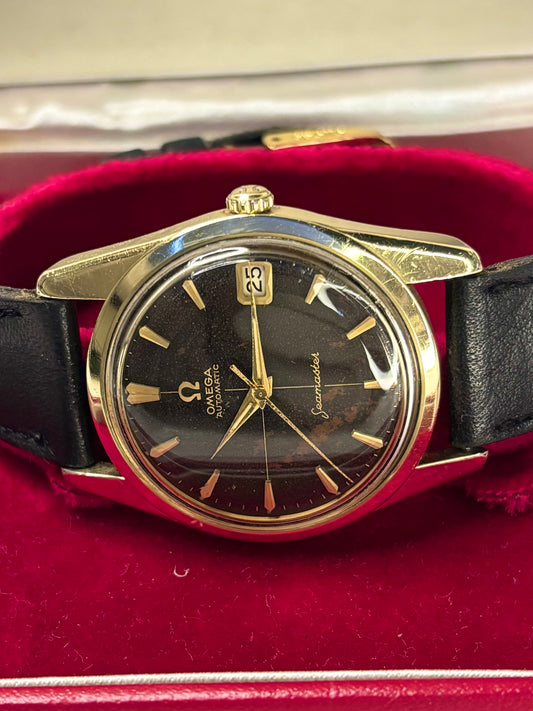
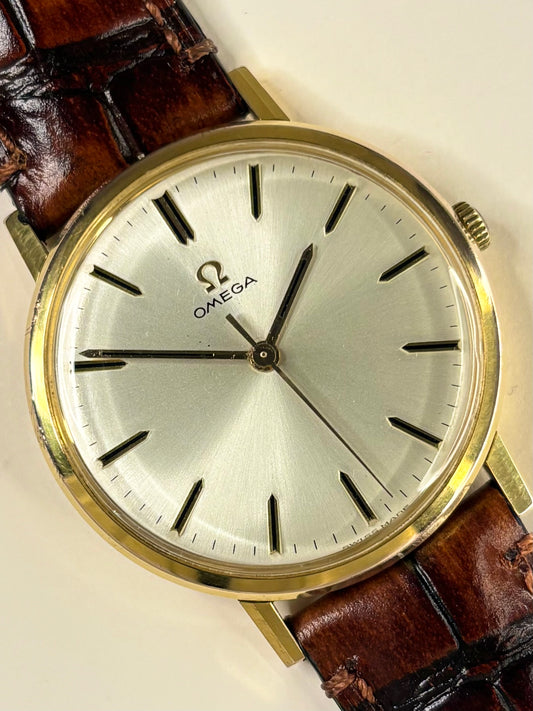
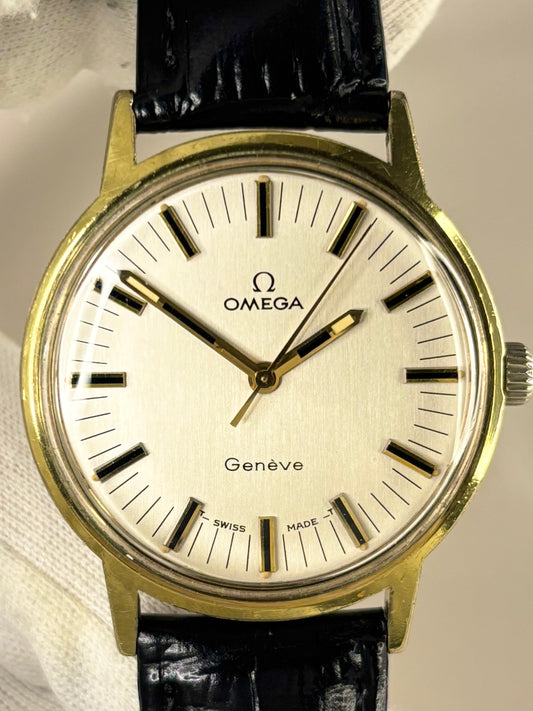
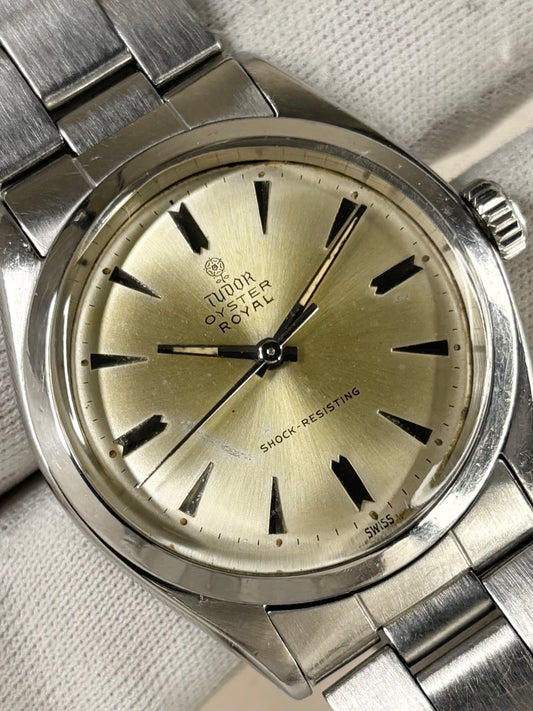
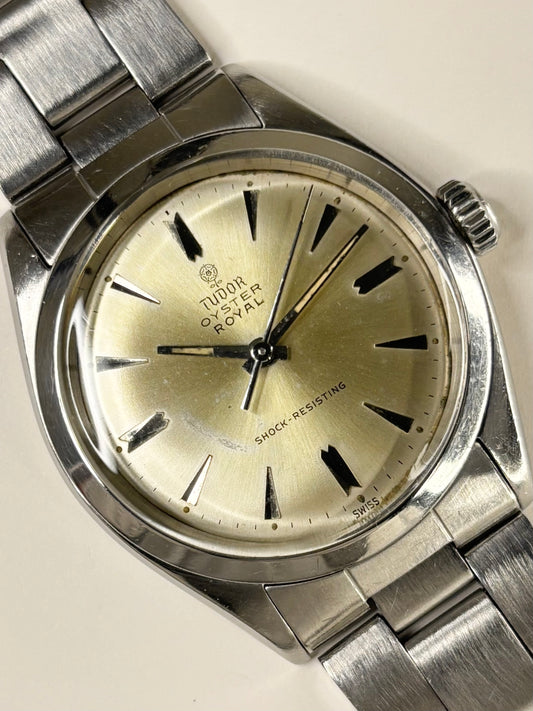
Movement design had moved on, and the central sweeping seconds hand had become the standard. A single hand, originating from the centre of the dial, sweeping continuously around the chapter ring. It gave watches a cleaner, more modern look, and it became so universal through the 1960's that its presence on a vintage timekeeper is one of the most immediate signals that you are looking at something from this era rather than the one before.
On a well-preserved 1960's Omega or Rolex, that seconds hand sweeping smoothly around the dial is one of those details that makes the watch feel genuinely alive on the wrist.
3. Clean, Modern Dial Design - Baton Indices and Minimalist Layouts

The ornate dial details of the 1950s - the pie-pan profiles, the elaborate applied markers - gave way to something cleaner and more graphic through the 1960s. This was the decade of the baton index.
Baton indices are simple, rectangular hour markers, often slim and elongated, applied to the dial surface in polished or brushed metal. They replaced the more decorative markers of the previous decade with something altogether more modern and minimal - perfectly in step with the design sensibility of the 1960's.
Hand styles shifted too. Dauphine and alpha hands, so characteristic of the 1950s, were increasingly replaced through the 1960s by baton hands - straight, flat, and clean - or sword hands, which taper elegantly to a fine point. Both styles complement the more restrained dial design of the decade beautifully.
If you pick up a vintage timepiece with a clean, uncluttered dial, baton indices, and simple modern hands, there is a very strong chance the 1960s is where it belongs.
4. The Rise of the Tool Watch
This is perhaps the most exciting development of the 1960s, and it is one of the things that makes vintage watches from this decade so enduringly popular with collectors today.
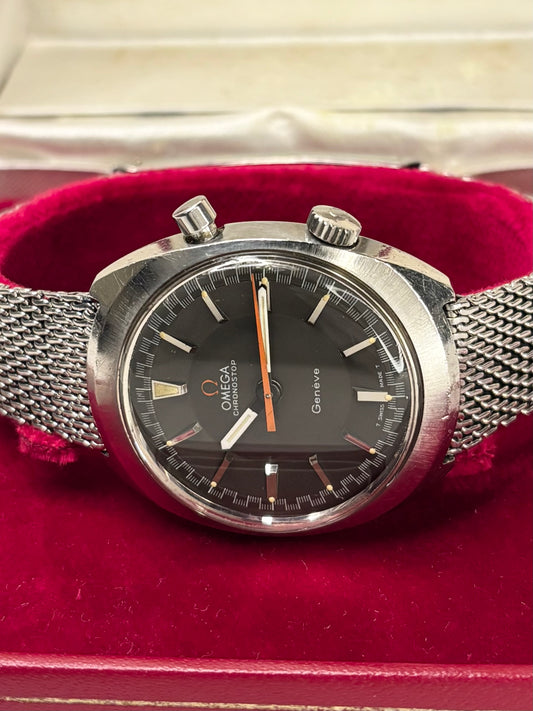
The 1950s laid the groundwork, but the 1960s was when the tool watch truly came into its own. Dive watches, chronographs, GMT watches - these were timepieces built to do a job, and the decade produced some of the most iconic examples ever made. The Rolex Submariner. The Omega Seamaster. The Omega Speedmaster - which became the first watch worn on the moon in 1969, one of the most extraordinary chapters in the history of the timepiece.
If you come across a vintage watch with a rotating bezel, a screw-down crown, or a tachymeter scale on the dial, you are likely looking at the 1960s tool watch in its natural habitat. These watches were designed to accompany their owners into extreme environments - and the ones that have survived in good condition are genuinely special pieces of history.
5. The Date Complication

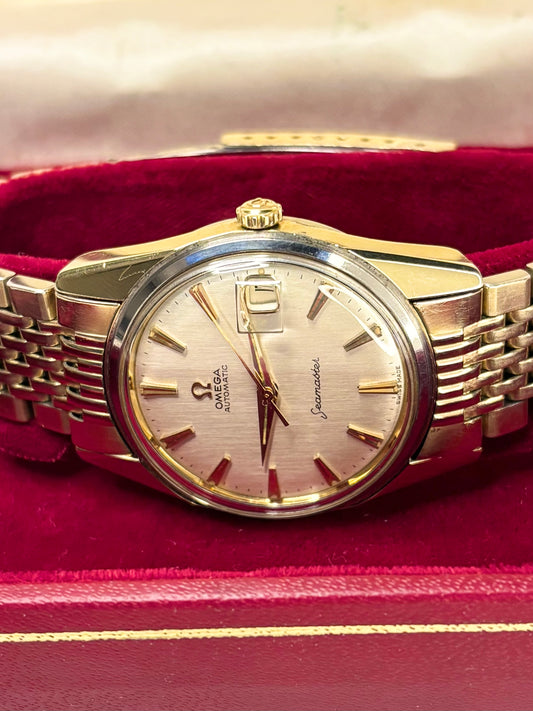
The date window - that small aperture in the dial, typically at 3 o'clock, displaying the current date - was not invented in the 1960s, but it was during this decade that it became truly widespread.
What had previously been a more unusual complication found on higher-end timepieces gradually filtered down and became a standard feature on a huge range of watches through the 1960s. Rolex refined and popularised the Cyclops lens - a small magnifying bubble over the date window at 3 o'clock - during this period, making the date easier to read and creating one of the most recognisable design details in watchmaking history.
Not every 1960s vintage timekeeper will have a date window, but if you spot one on a watch with the other features on this list - particularly a central seconds hand and baton indices - it is a very strong indicator that the 1960s is exactly where this piece is from.
So, Is Your Vintage Watch a 1960s Piece?
A growing case size, a central sweeping seconds hand, clean baton indices and modern hands, the spirit of the tool watch, and the arrival of the date complication - if your vintage timepiece is checking several of those boxes, you are very likely holding something from one of the greatest decades in watchmaking history.
At AR Collectables, 1960's vintage watches hold a very special place in our collection! Every piece is handpicked, cleaned, and tested - and we are always happy to chat if you want to know more about a specific timepiece. Just drop us a message. 🤝
Browse our full vintage watch collection today!
Enjoyed this one? The 1970's post is coming up next - and trust me, that decade has some genuinely wild features to look out for. Keep an eye on the blog!