
From Hide to Wrist - How Grain Leather Watch Straps Are Made
If you have ever browsed a collection of leather watch straps, you will have noticed that some of them carry a beautiful textured surface - a repeating pattern pressed into the leather that can mimic everything from the scales of a crocodile to the dimpled texture of an ostrich hide. These are grain leather straps, and they are one of the most popular and versatile options in the world of watch strap collecting.
But how exactly does that pattern get there? And what makes a quality grain strap worth choosing? Let's get into it.
What Is a Grain Leather Watch Strap?

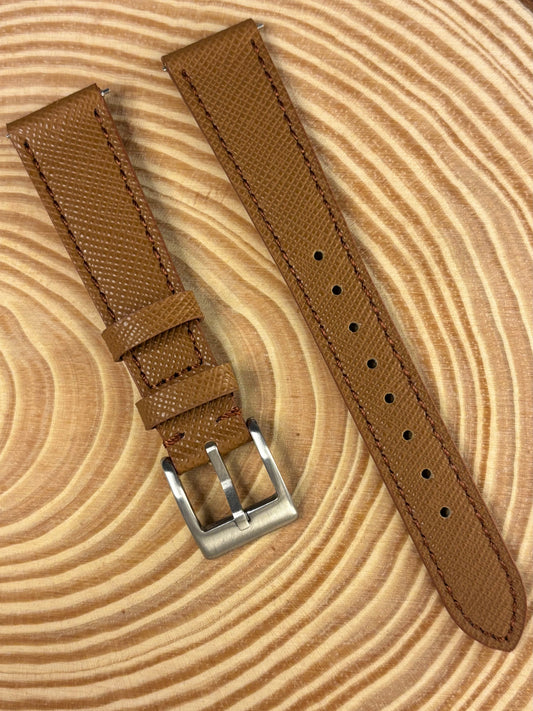
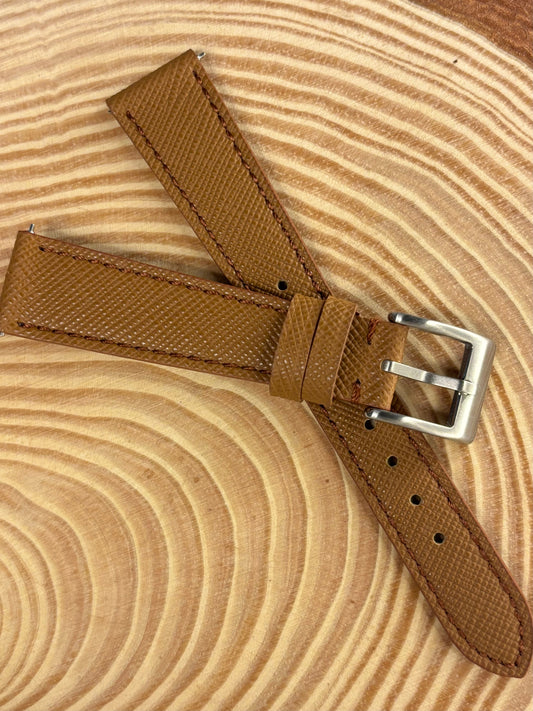
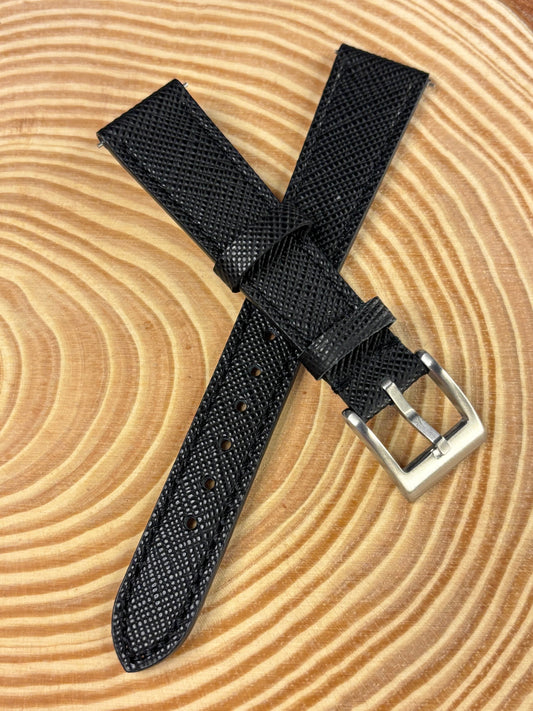
A grain leather watch strap is a strap made from a base leather - most commonly a quality calf leather - that has had a pattern mechanically pressed, or embossed, into its surface. The result is a consistent, defined texture across the face of the strap that gives it a distinctive visual character.
Grain straps are often designed to replicate the appearance of exotic leathers - crocodile, alligator, ostrich, lizard, and shark grain patterns are all widely available and enormously popular. The embossing process allows these beautiful textures to be reproduced consistently and accessibly, making grain straps one of the best options for anyone who loves the look of an exotic leather strap!
It is worth saying clearly - a well-made grain strap is not a compromise. It is a product in its own right, with its own appeal, and when it is made properly, it looks and wears beautifully.
Browse our full range of premium grain leather watch straps today!
Starting With the Right Base Leather
The foundation of any quality grain leather strap is the base leather it starts with, and this matters far more than people often realise.
The embossing process can only do so much - if the leather underneath is poor quality, the finished strap will show it. A quality grain strap begins with a genuinely good piece of leather, most typically calf leather, chosen for its fine, even surface and its ability to take an embossed pattern cleanly and hold it well over time.
Thicker, firmer leathers tend to produce crisper, more defined grain patterns. Softer leathers can produce a more subtle result - still beautiful, but with a slightly different character. The choice of base leather is one of the first and most important decisions a strap maker makes, and it has a direct impact on everything that follows.
The Embossing Process
This is where the magic happens - and it is a more involved process than you might expect.
Embossing is done using a metal plate or roller engraved with the negative of the desired pattern. So for a crocodile grain strap, for example, the embossing plate carries the inverse of a crocodile scale pattern - raised where the scales should be recessed, recessed where they should be raised.
The leather is first conditioned with a small amount of moisture, which makes it more receptive to the embossing process and helps the pattern set cleanly into the surface. The embossing plate is then brought into contact with the leather under significant heat and pressure - typically using a hydraulic press. The heat and pressure together cause the leather fibres to compress and reform in the shape of the pattern, creating a crisp, defined texture that is permanently set into the surface.
The amount of pressure and heat applied, and the duration of the press, all affect the depth and definition of the finished grain. Getting this right consistently is a genuine skill - too little pressure and the pattern is shallow and unclear, too much and the leather can be damaged or the pattern can look overworked and artificial. A good strap maker knows exactly how to read the leather and adjust accordingly.
The Different Grain Patterns

One of the most enjoyable things about grain leather straps is the sheer variety of patterns available, and the completely different characters they give to a finished strap.
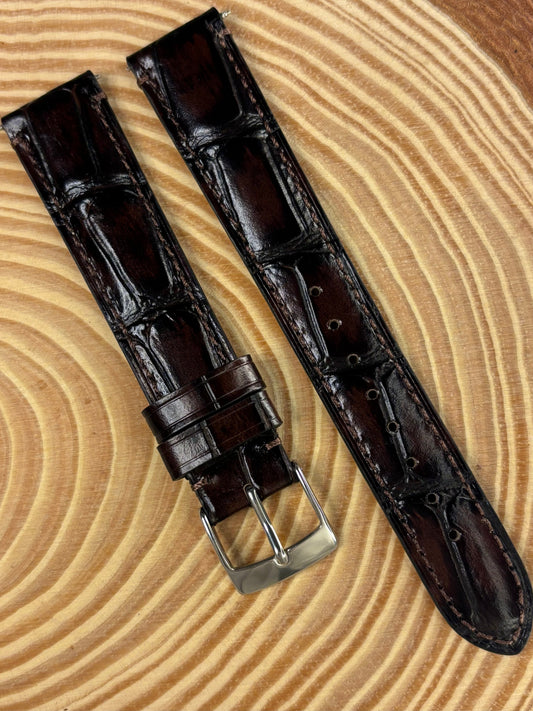
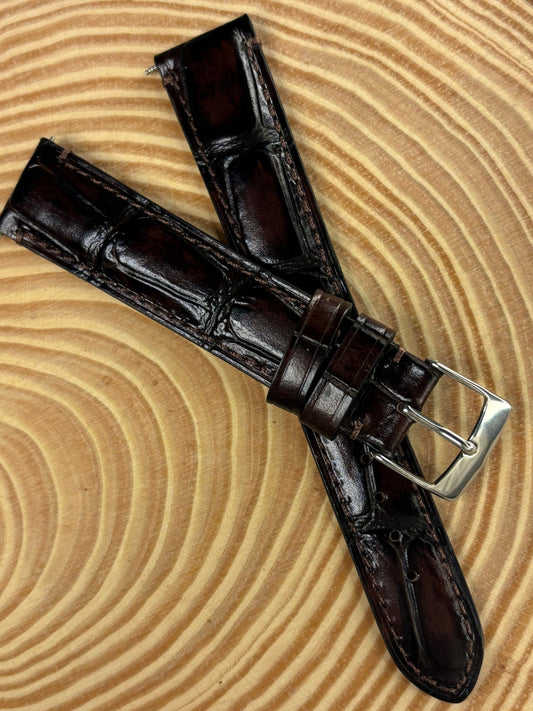
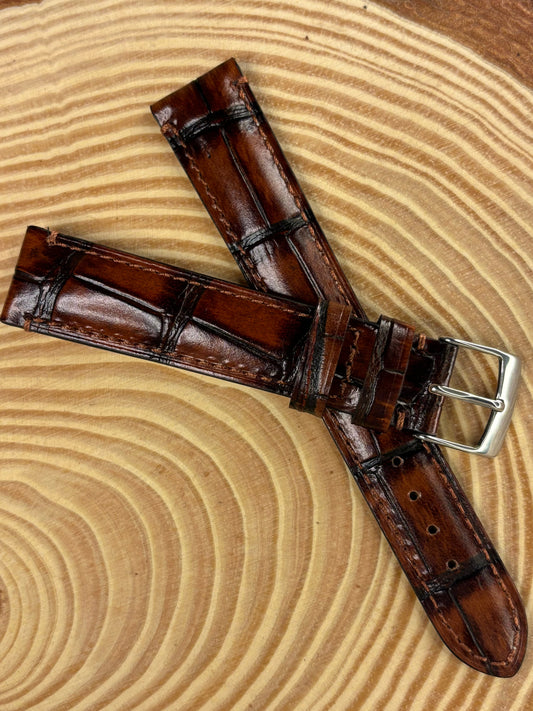
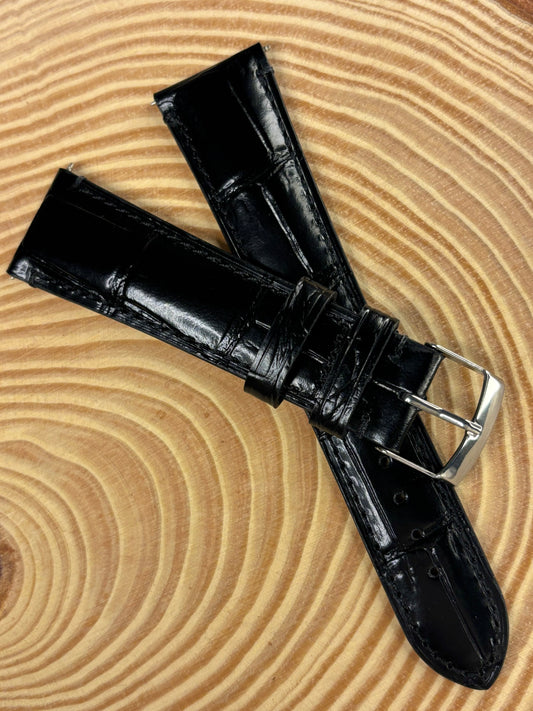
Crocodile and alligator grain are the most classic choices - the rectangular, slightly asymmetric scale pattern is instantly recognisable and lends a real sense of occasion to any timepiece. A crocodile grain strap on a vintage dress watch is one of those combinations that simply never goes out of style.
Ostrich grain replicates the distinctive quill follicle pattern of genuine ostrich leather - a bold, rounded, pebbled texture that has a wonderful warmth and softness to it. It is a more relaxed pattern than crocodile grain and works brilliantly on sportier vintage pieces as well as dress watches.
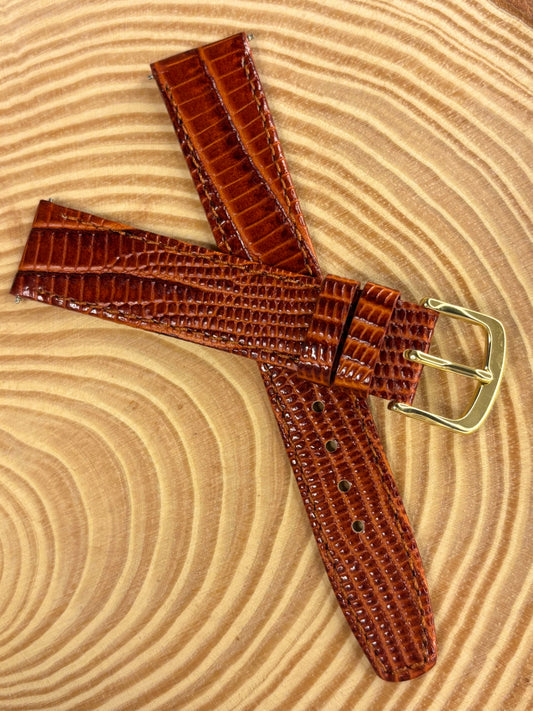
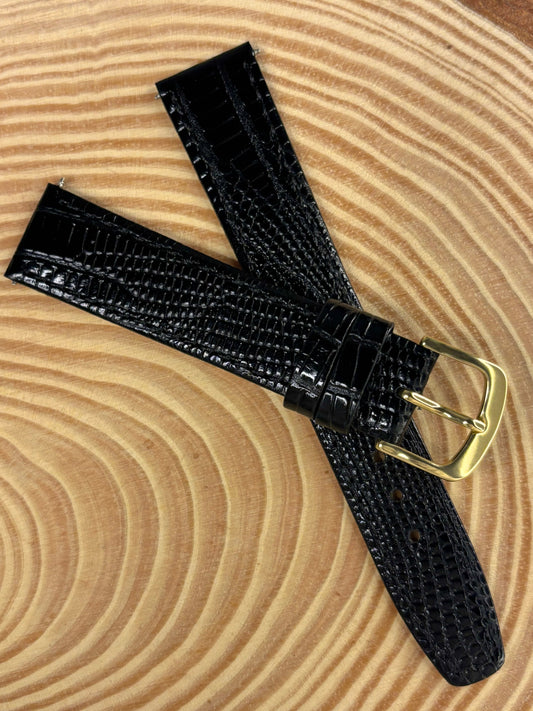
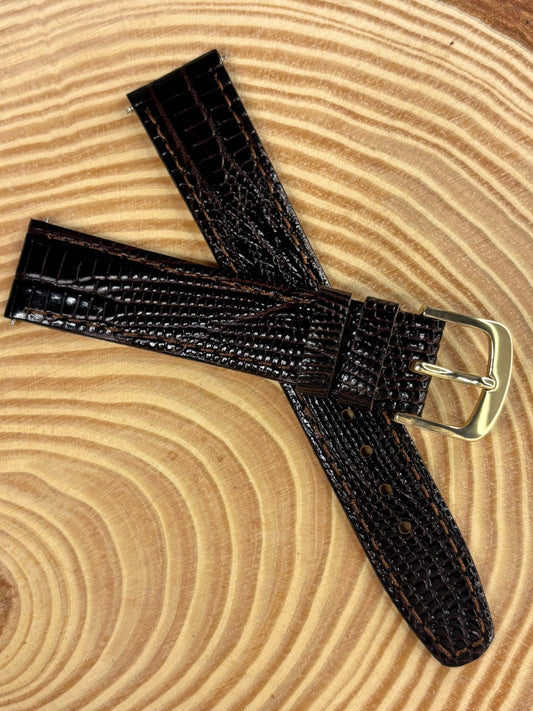
Lizard grain and teju grain offer something finer and more delicate - smaller, more intricate scale patterns that suit slimmer, more elegant timepieces particularly well. The detail in a well-executed lizard or teju grain pattern is genuinely impressive up close.
Dyeing and Finishing
Once the embossing is complete, the strap goes through the dyeing and finishing process - and this is where a great deal of the strap's final character is determined.
Grain leather straps are dyed using specialist leather dyes that penetrate the surface and bring the embossed pattern to life. The dye settles differently in the recessed areas of the pattern versus the raised areas, creating a natural-looking depth and variation of tone that gives the strap real visual richness. On a quality crocodile grain strap, for example, you will often see a slightly darker tone sitting in the recesses between the scales, which gives the pattern a three-dimensional quality that is really striking.
After dyeing, the surface is finished with a protective coating - either a matte, satin, or glossy finish depending on the desired look - which protects the leather and the embossed pattern from wear and moisture.
The edges of the strap are then bevelled and burnished to a smooth, clean finish, the lining is bonded to the back of the strap, and the stitching is applied. As with any quality leather strap, the stitching and edge finishing at this stage are where the overall quality of the piece either announces itself or gives itself away.
Why Choose a Grain Leather Strap?
There are a few really compelling reasons why grain leather straps are such a popular choice, and they are worth spelling out.
Consistency is one of the biggest. Genuine exotic leather straps - real crocodile, real ostrich, real lizard - are beautiful, but the natural variation in the hides means that no two straps are identical. For some collectors that is part of the appeal. For others, particularly when building a collection of straps to pair with multiple watches, the consistent appearance of a well-made grain strap is genuinely preferable.
Value is another. A premium grain leather strap made from quality calf leather with a beautifully executed embossed pattern can look and wear every bit as well as a genuine exotic strap at a fraction of the price. That is not a consolation - it is a genuine advantage.
And variety is perhaps the most straightforward reason of all. Grain patterns open up an enormous range of textures, colours, and styles that would simply not be available or accessible if exotic leather were the only option. From a bold crocodile grain in deep burgundy to a subtle teju grain in warm tan, the world of grain leather watch straps is a genuinely exciting one to explore.
At AR Collectables, every strap in our collection has been chosen with quality and character firmly in mind. If you have any questions about which grain pattern might suit your timepiece, just drop us a message - we would love to help you find the perfect match. 🤝
Browse our full premium leather strap collection today!